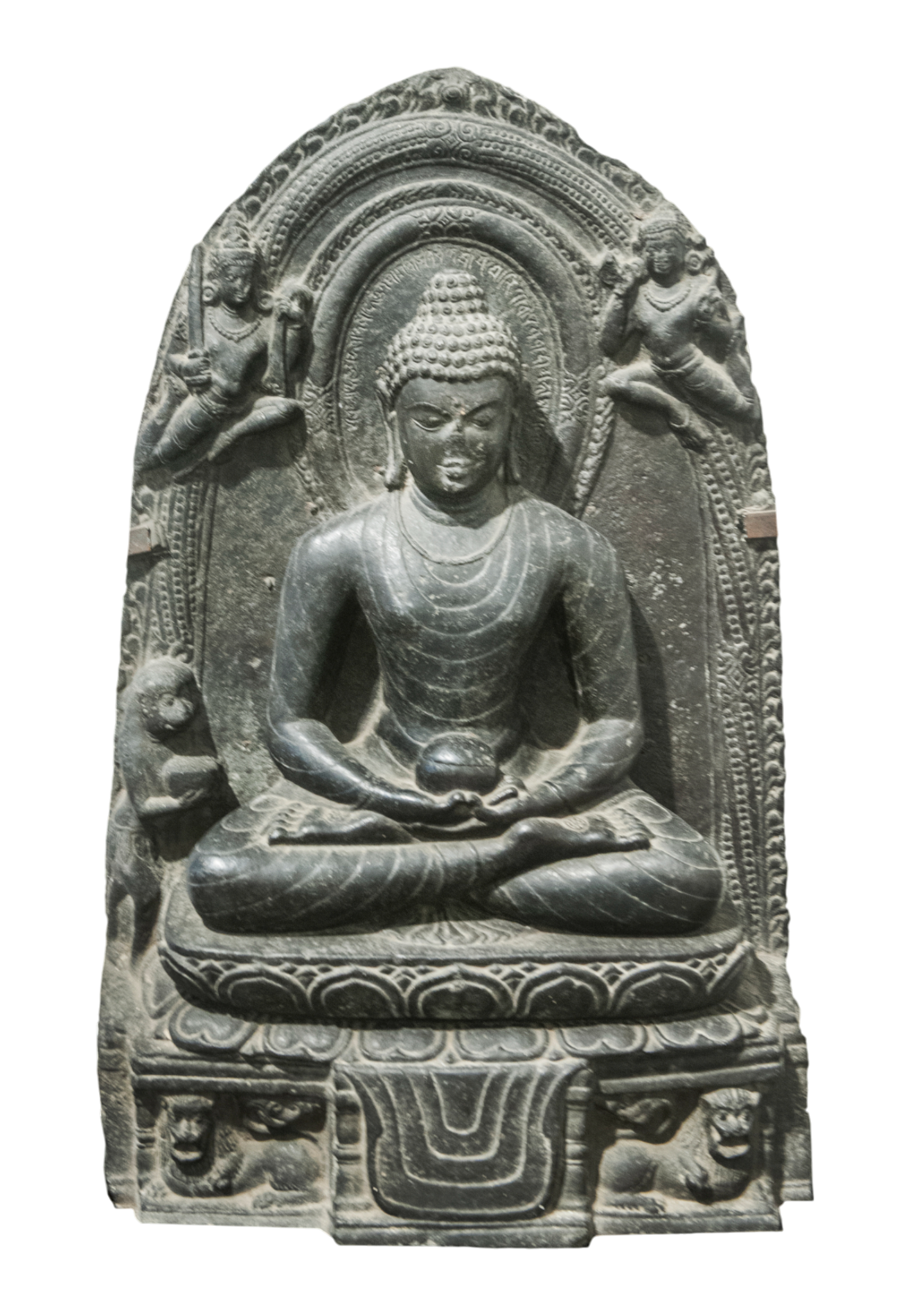
This Seated Buddha with a honey bowl, from Bihar and belonging to the Pala school of art, exemplifies refined craftsmanship in black basalt. The Buddha is shown in dhyana mudra, seated on a double-lotus pedestal with a serene expression, symbolizing deep meditation. The honey bowl in his lap represents compassion and the sweetness of enlightenment, recalling the legend of bees offering honey to the meditating Buddha. Graceful attendants, ornate halo, and lion motifs reflect the Pala period’s elegance and devotional artistry.
The inscription reads as follows:
Read: (By Mukant Bishwas): ye dharmmā hetu-prabhavāḥ hetuṁ teṣāṁ tathāgato hyavadata teṣāṁ ca yo nirodha evaṁ-vādī mahāśramaṇaḥ.
Translation (literal): The Tathāgata has declared the causes of those phenomena which arise from a cause, and also their cessation. Thus speaks the Great Ascetic (Mahāśramaṇa).