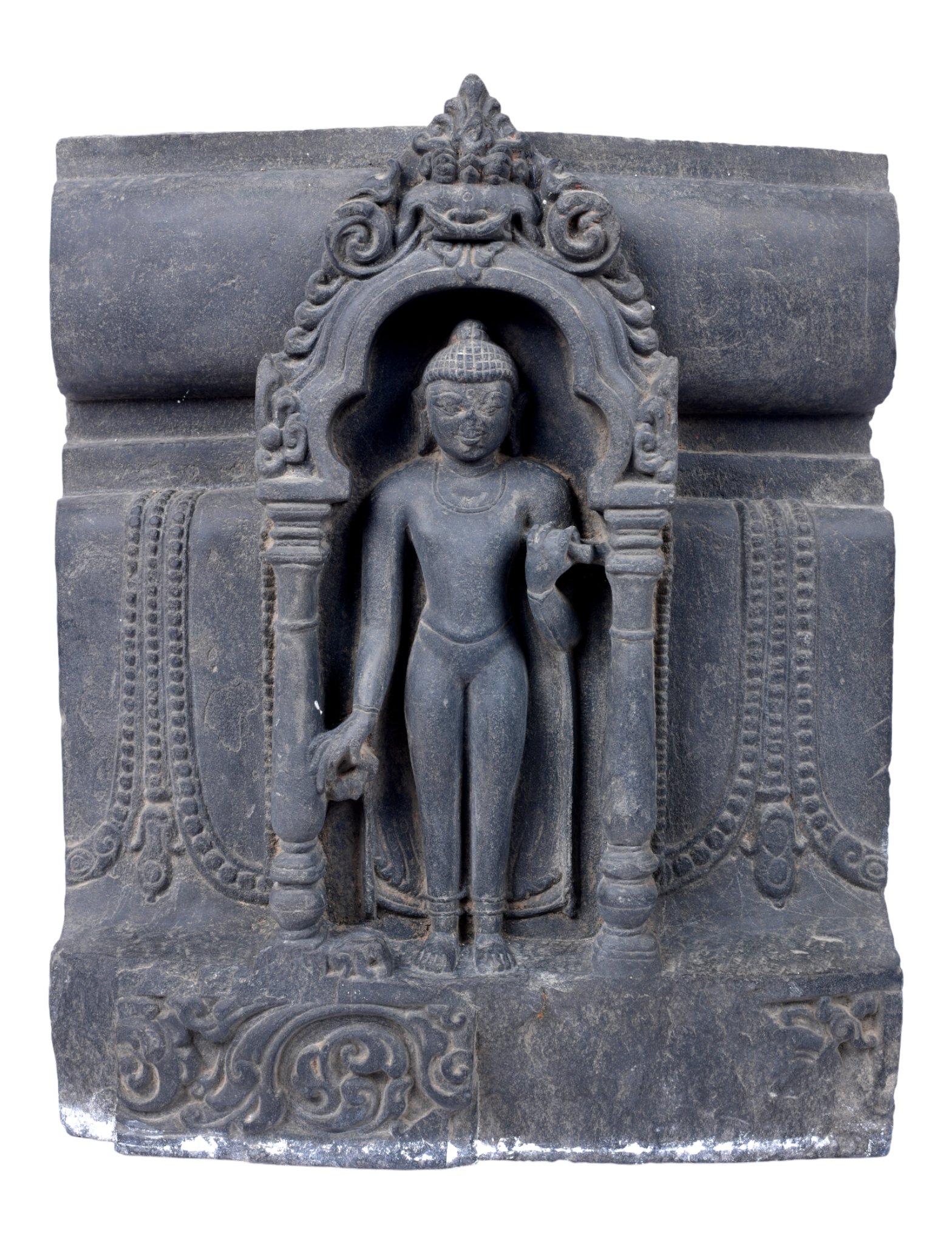
The sculpture depicts an episode from Buddhist tradition known as one of the four minor miracles of the Buddha, illustrating his profound compassion and loving-kindness (Maitri). The Buddha is portrayed standing in a decorative trefoil niche, while a subjugated elephant is depicted as a small figure near his feet. The sculpture appears to be part of a stupa slab, evident from its concave shape, the garland design engraved on the base, and the floral motifs. The story states that Devadatta, the Buddha’s jealous cousin, hatched a plan to kill him by provoking a fierce elephant named Nalagiri. After intoxicating the elephant, Devadatta unleashed it onto the Buddha’s path, intending to create havoc. However, when the enraged elephant charged toward him, the Buddha stood firm. Rather than fleeing, he directed his immense kindness toward the animal. Astonishingly, the strength of his Maitri calmed Nalagiri, leading the elephant to lower its trunk, kneel, and pay its respects. This story conveys the powerful truth that love can ultimately conquer anger.