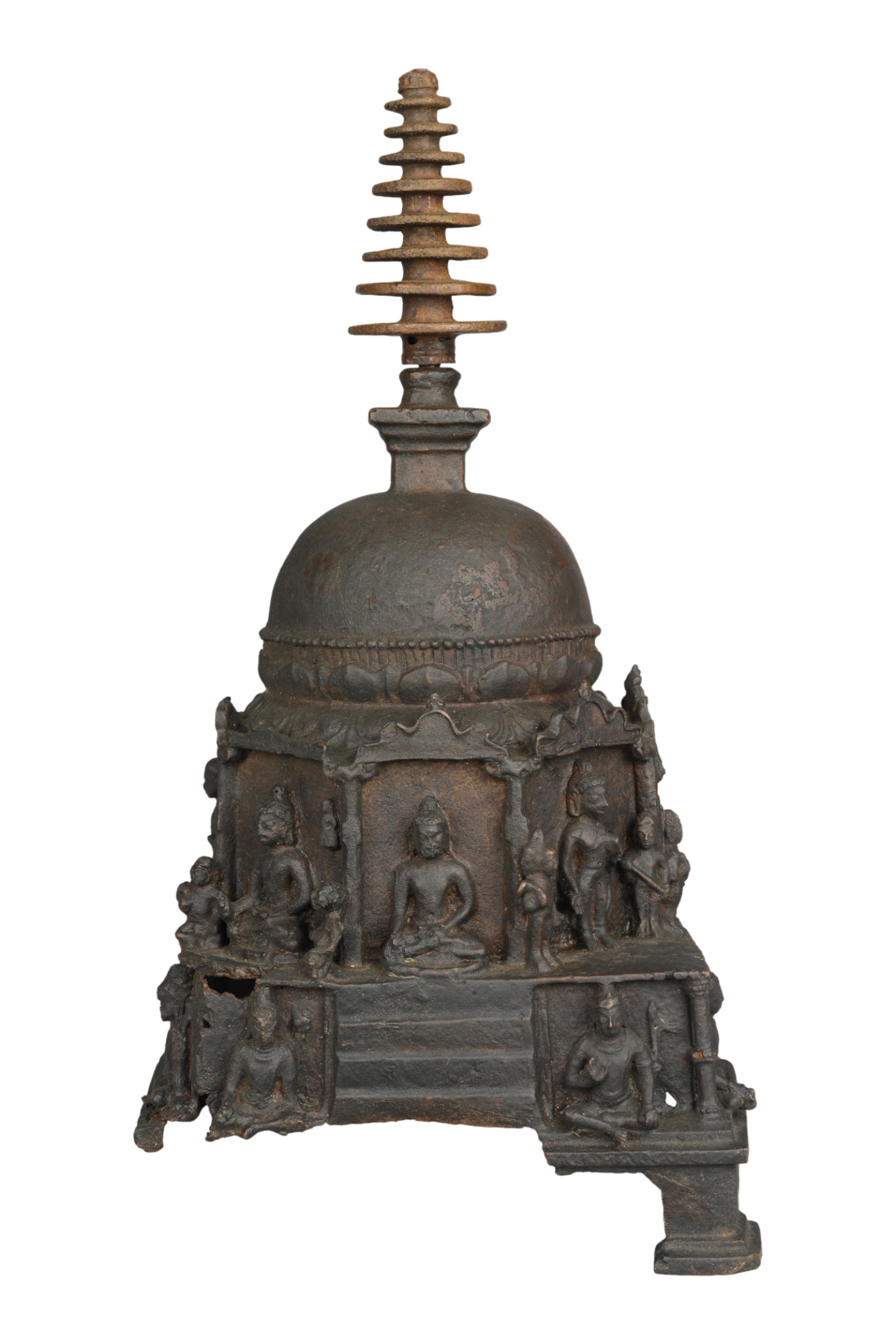
This 12th-century palm-leaf folio (Accession No. 62.115), created during the Pala period of Eastern India, depicts celestial Buddhist deities in reverence of a prominent stupa. Measuring 5 x 53.6 cm and painted with natural pigments, it reflects the blend of devotional art and sacred text. Central to the artwork is the stupa, symbolising enlightened truth, flanked by two elongated bodhisattvas in añjali mudra, embodying the late Pala artistic style. The folio is from the Aṣṭasāhasrikā Prajñāpāramitā (“Perfection of Wisdom in 8,000 Lines”), which teaches the philosophy of emptiness (śūnyatā) and non-attachment. Instead of featuring a personal Buddha image, it emphasises the stupa as an object of worship. The text outlines the nature of prajñā (wisdom) and advocates the practice of the six pāramitās (perfections) without clinging to fixed ideas. It balances conventional actions with ultimate insight, focusing on the unity of merit and wisdom for the awakening of all beings.