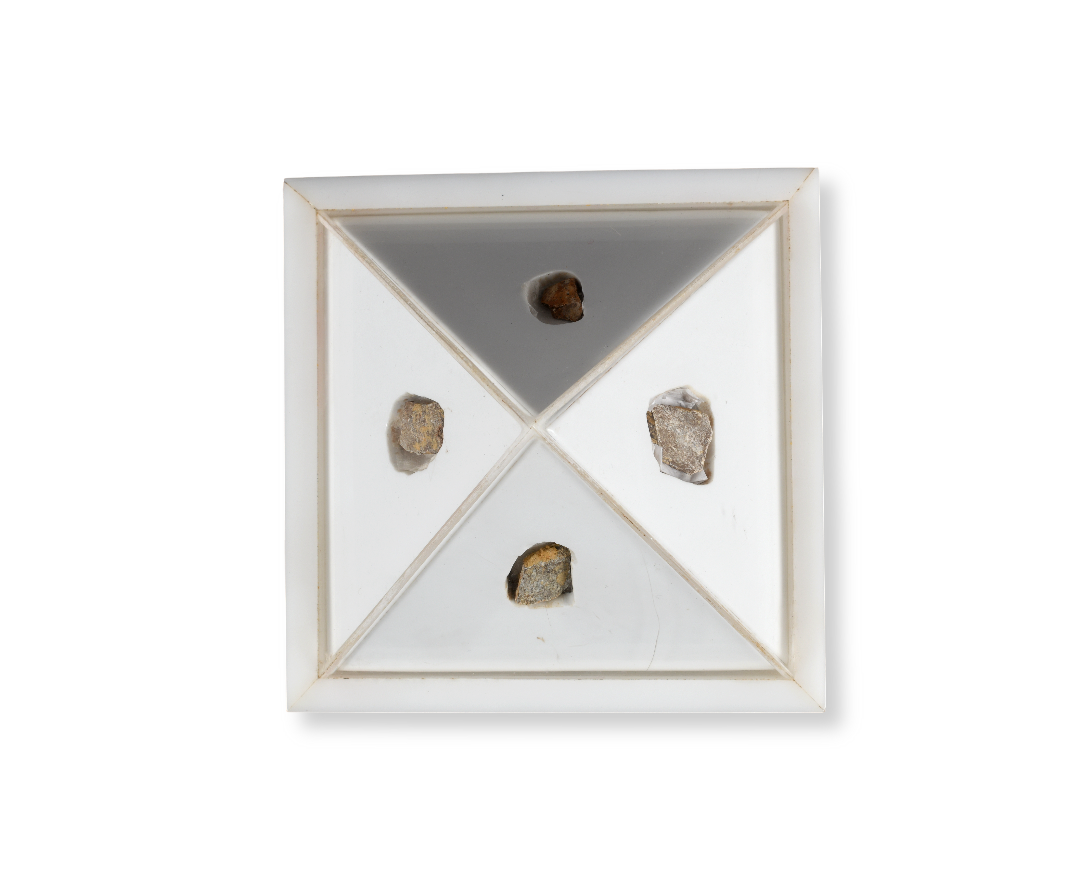
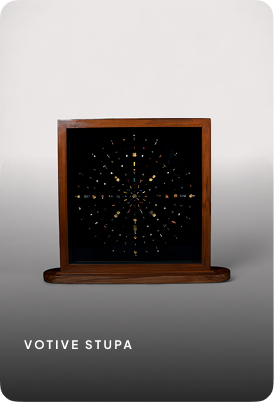
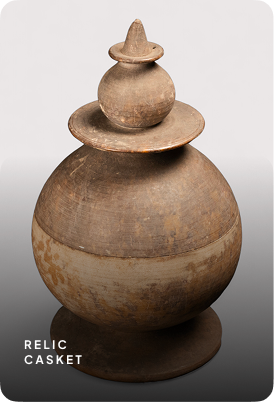
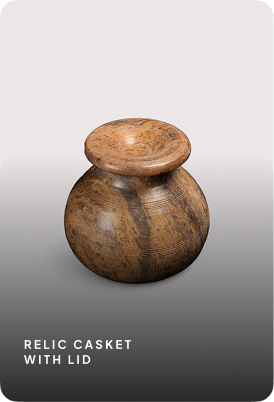
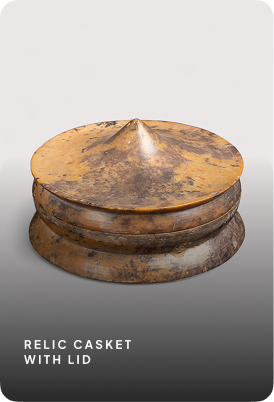
The discovery of the Buddha’s bone relics (Sarira-Dhatu) occurred at Piprahwa in the Siddharthnagara district of Uttar Pradesh, where in 1898, British engineer William Claxton Peppe excavated a stone casket containing five smaller urns with the Buddha’s bone fragments, ashes, gems, and gold ornaments, with an inscription linking them to the Buddha and his Shakya community; a portion of these relics was later given to King Rama V of Thailand. Subsequently, the Archaeological Survey of India (ASI) conducted deeper excavations in 1971-77 and found two additional soapstone relic caskets containing 22 sacred bone fragments dated to the 5th century BCE. Of these finds, 20 fragments are currently preserved and exhibited in the National Museum, New Delhi, while the remaining two fragments are housed in the Indian Museum, Kolkata, and this archaeological evidence is considered crucial in identifying Piprahwa as ancient Kapilavastu, the site associated with the Buddha’s early life.