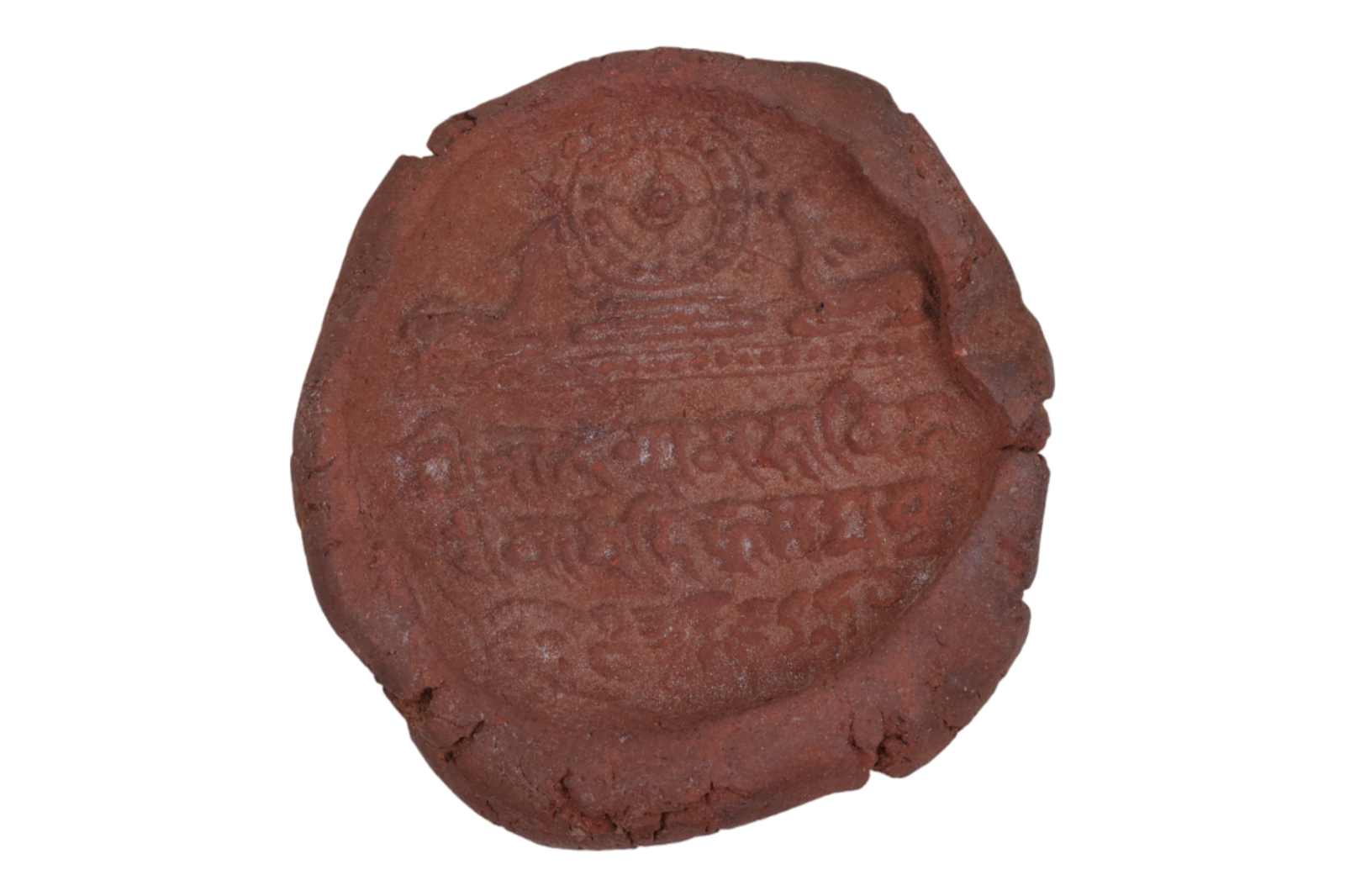
This terracotta seal from Nalanda Mahavihara features a detailed depiction of a deer alongside a wheel symbol, which together represent significant concepts in Buddhist philosophy. The inscription on the seal highlights the principle of dependent origination, known in Sanskrit as pratityasamutpada. This fundamental teaching emphasises the interconnectedness of all phenomena, illustrating how all things arise in dependence on multiple causes and conditions. The imagery of the deer, often associated with the Buddha’s first sermon, symbolises peace and the attainment of enlightenment. At the same time, the wheel, or dharmachakra, signifies the cycle of birth, death, and rebirth, as well as the path to liberation. Together, these elements encapsulate the core tenets of Buddhist thought and the transformative journey towards understanding and compassion.
The lower part of the seal is inscribed with the Buddhist creed, which frequently appears on Pala-period inscriptions and artworks written in the Siddhamatrika script, is known as the Ye dharma hetuverse. It is a core summary of the Buddha’s teaching on dependent origination (Pratityasamutpada).
It says:
Ye dharmā hetu-prabhavā hetuṃ teṣāṃ tathāgato hy-avadat
Teṣāṃ ca yo nirodho evaṃ vādī mahā-śramaṇaḥ
The standard translation is:
Of those phenomena which arise from causes, those causes have been taught by the Tathāgata (Buddha), and also their cessation. Thus taught the Great Śramaṇa (Great Recluse).