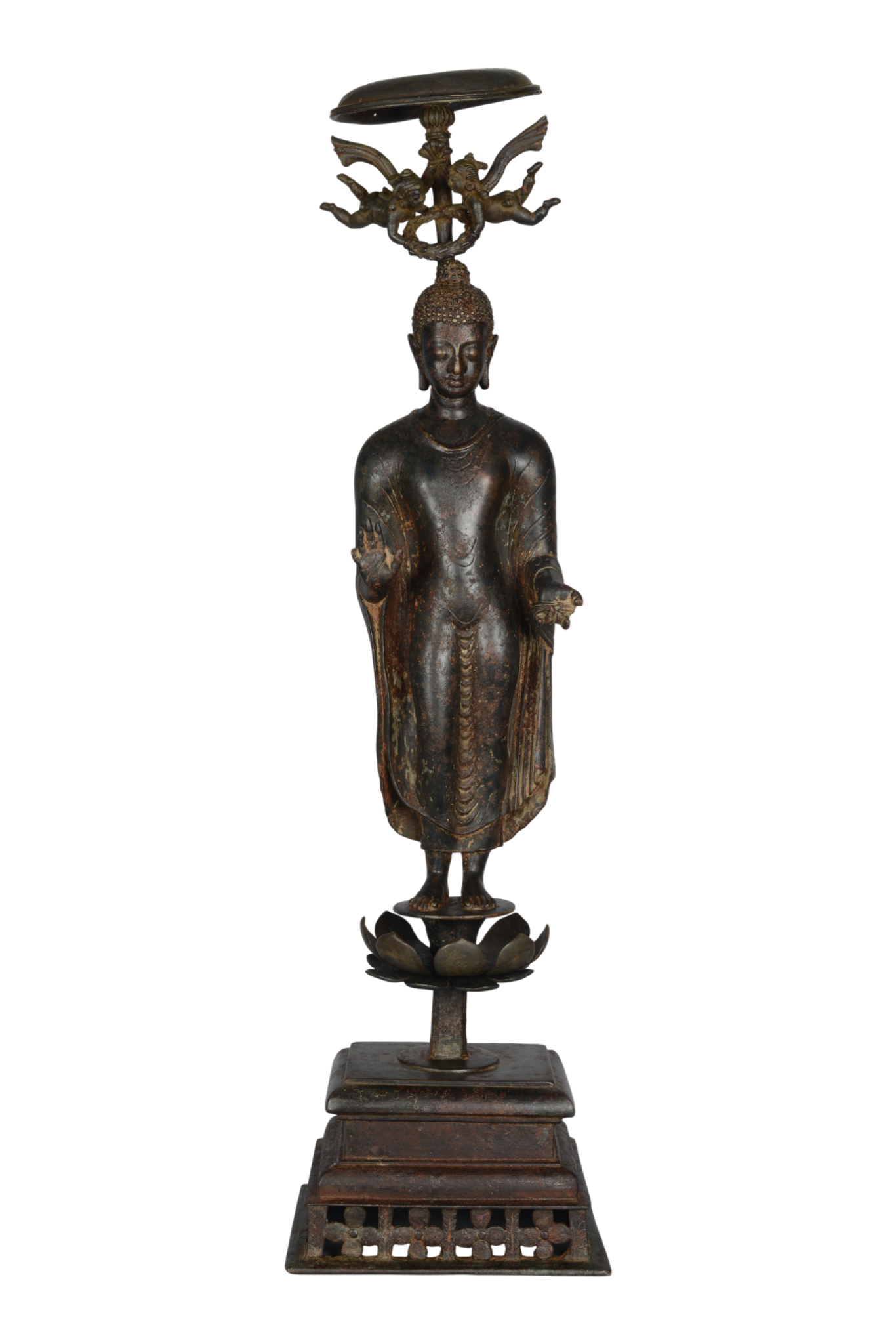
The Buddha is depicted standing on a dual lotus base, which rests upon a stepped square pedestal adorned with floral decorations. His right hand is positioned in the gesture of fearlessness (Abhaya Mudra), while the left hand gracefully holds the hem of his robe (sanghati), draping elegantly over both shoulders. The downcast eyes, inlaid with silver, symbolize focused concentration of the mind. The aesthetic of the Buddha is defined by a refined simplicity, further enhanced by an umbrella post and suspended winged cherubs that support a garland above his head, enriching the sculpture’s visual narrative. This composition reflects Ajantaesque stylistic influences, noted for intricate modeling and thoughtful arrangement, suggesting a dating to the late 5th century CE. This bronze icon is part of a hoard discovered in 1964 from the village of Phophnar near Burhanpur in Madhya Pradesh and belongs to the Vakataka kingdom. The pedestal features the inscription: ‘Deyadharmoyam- Nagachari Vira/ Gift of Nagachari Vira.’