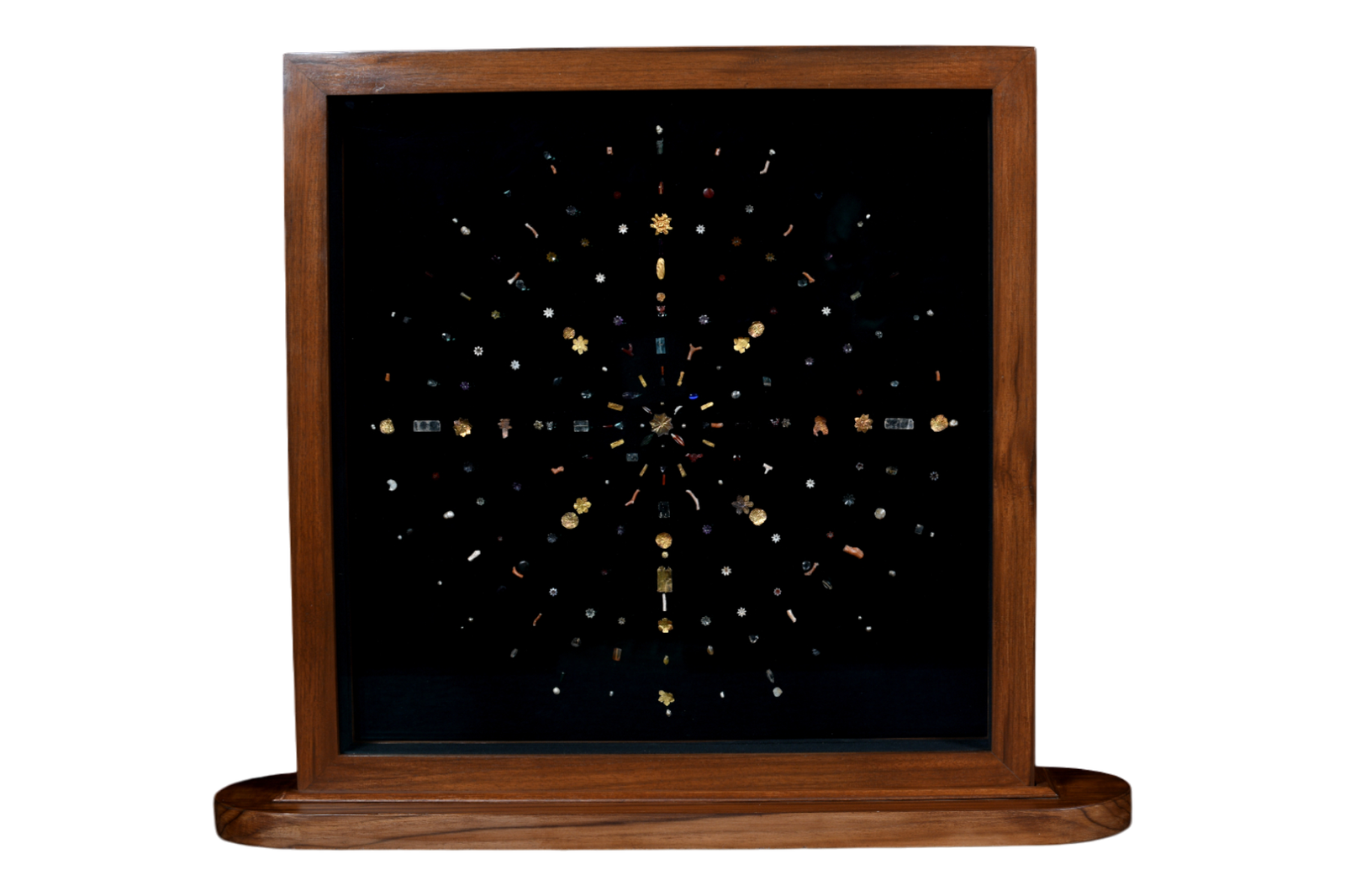
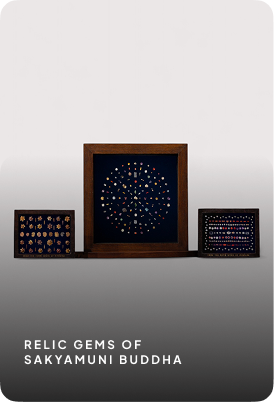
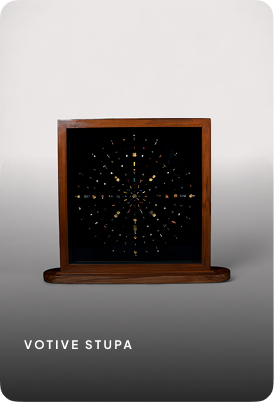
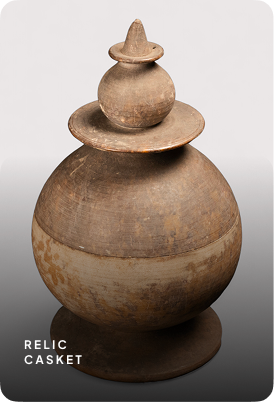
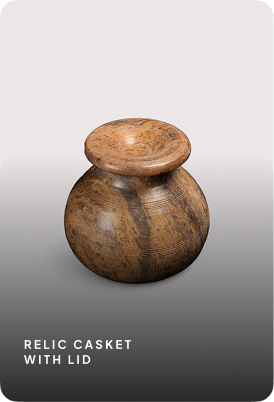
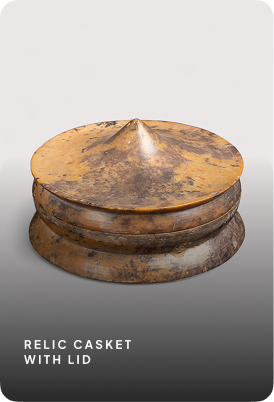
In 1898, William Claxton Peppé discovered the Piprahwa gem relics, which led to 349 gem relics being placed under his custody. A significant portion of these relics became part of the Imperial Museum in Calcutta, now known as the Indian Museum in Kolkata. The museum classified these relics as ‘AA’ antiquities, which prohibited their sale and restricted their movement. However, they are now displayed in this magnificent exhibition for the first time and reunited with the repatriated gem relics which were once taken away from India by the Peppé family. These gems, made from semiprecious stones, pearls, and beads, are shaped into emblems such as the tri-ratna, bird, leaf, and lotus motifs. Alongside these gems are numerous pieces of gold and silver leaf, some of which are impressed with crosses, lions, and early Buddhist symbols. Among the unique pieces is a group of tiny ornaments referred to as “star-shaped flowers” by Harry Falk. These jewels were carved from small, flat stone cones, hollowed at the centre and shaped into six or more petals by meticulously sawing the stone between them. This process required great skill and precision. Each ornament has a central perforation, indicating that they were initially strung, possibly as part of a necklace, garland, or decorative textile. A faint circular mark where the petals meet suggests that they were shaped using a thread saw, a delicate ancient tool.