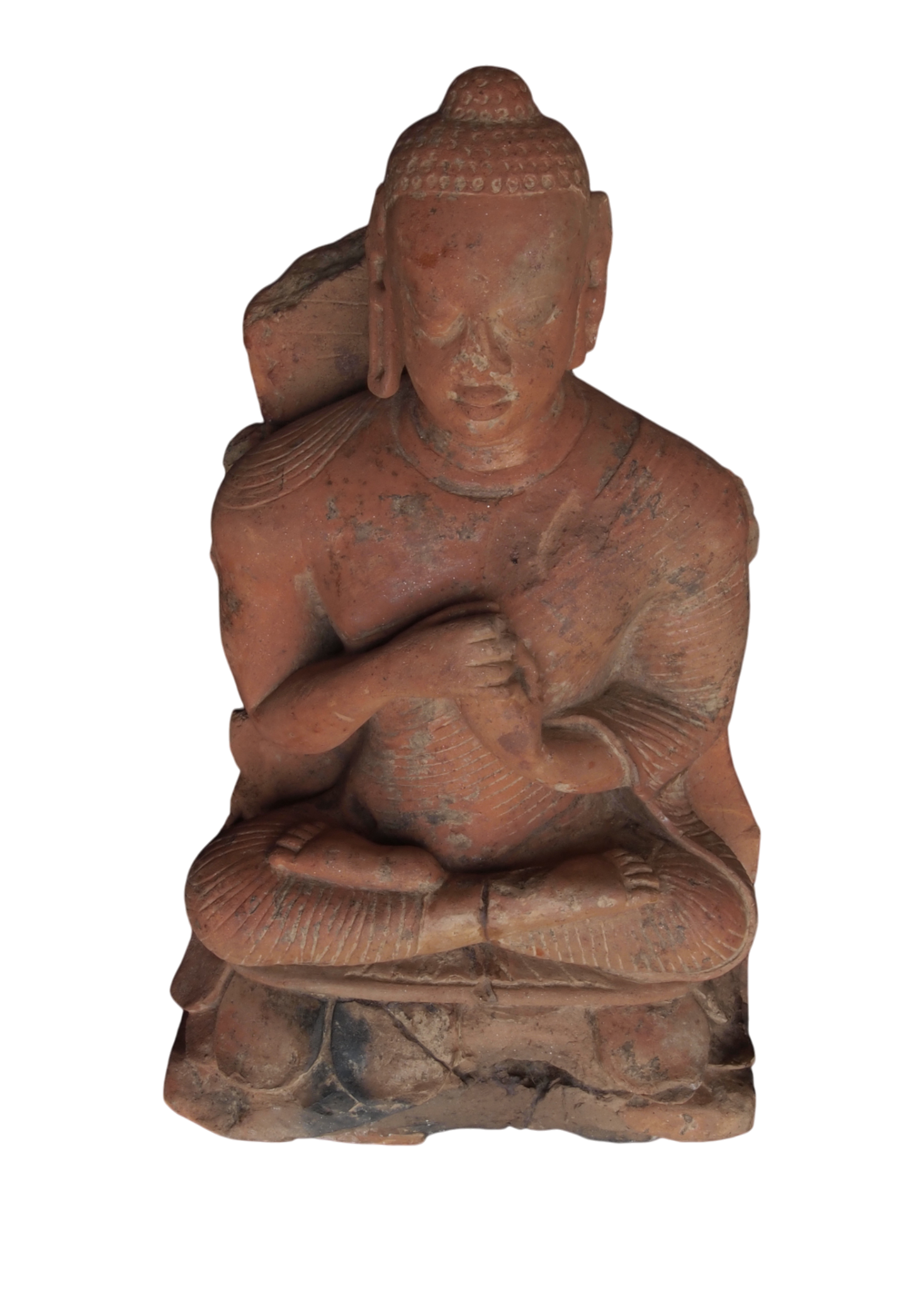
Terracotta representations of the Buddha hold an essential place in the study of early Buddhist art, even though they appear less frequently than images made in stone or stucco. In this sculpture, the Buddha is depicted in bodhyanga mudra (the teaching gesture). His calm and serene expression, reflecting the spiritual ideal associated with the Buddha, adds charm to an image that is otherwise not perfectly proportioned. The curly hair with uṣṇīṣa, the ūrṇā on the forehead, elongated ears, downcast eyes, and full lips all reflect the mature Kuṣāṇa style. The leaves of the lotus seat beneath him have a naturalistic and supple appeal. The Buddha’s robe, marked with incised lines, passes over his left shoulder and rests lightly on the upper part of his right shoulder—a feature that is quite rare. The halo marking the divinity of Buddha is plain yet broken.