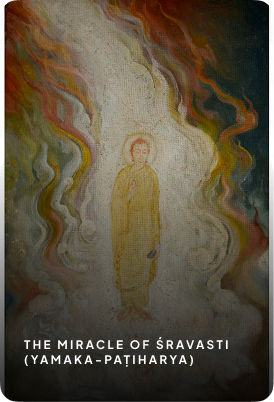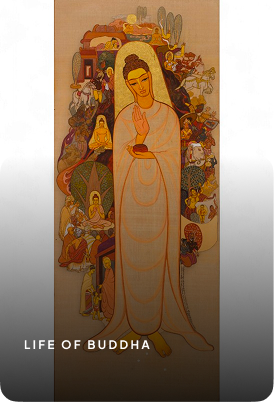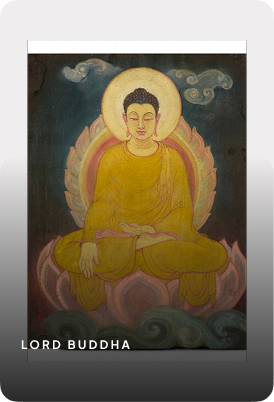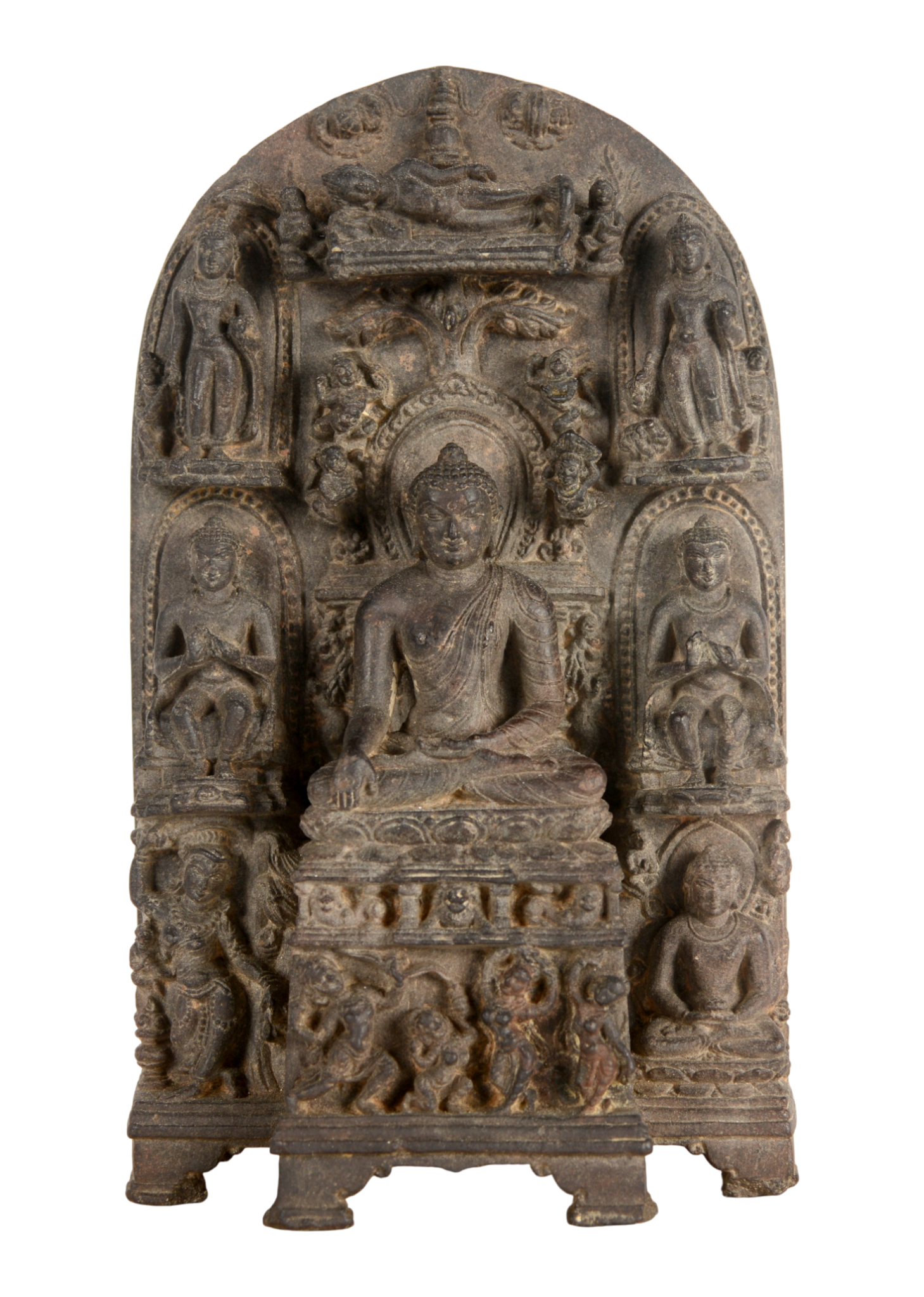
The miniature stele, depicting the eight great miracles (ashtamahapratiharya) from the Pala period, features the Buddha in the thunderbolt posture (vajraparyankasana) on a double-lotus pedestal beneath the bodhi tree, performing the earth-touching gesture (bhumisparsha mudra). The pedestal depicts the three daughters of Mara attempting to dissuade him from enlightenment, while Bhudevi witnesses the momentous event. The scenes are arranged in a clockwise narrative order, including: Gotama’s birth at Lumbini, his Descent from Tushita heaven at Sankissa, the First Sermon of the Buddha at Sarnath, and at the apex, the Great Demise (Mahaparinirvana) at Kushinagar. Additional scenes feature the Miracle at Shravasti, the Taming of Nalagiri at Rajgir, and the Gifting of the Honey Bowl by a Monkey at Vaishali.
The back of the stele is inscribed with the Buddhist creed, which frequently appears on Pala-period inscriptions and artworks written in the Siddhamatrika script, is known as the Ye dharma hetu verse. It is a core summary of the Buddha’s teaching on dependent origination (Pratityasamutpada).
It says:
Ye dharmā hetu-prabhavā hetuṃ teṣāṃ tathāgato hy-avadat
Teṣāṃ ca yo nirodho evaṃ vādī mahā-śramaṇaḥ
The standard translation is:
Of those phenomena which arise from causes, those causes have been taught by the Tathāgata (Buddha), and also their cessation. Thus taught the Great Śramaṇa (Great Recluse).