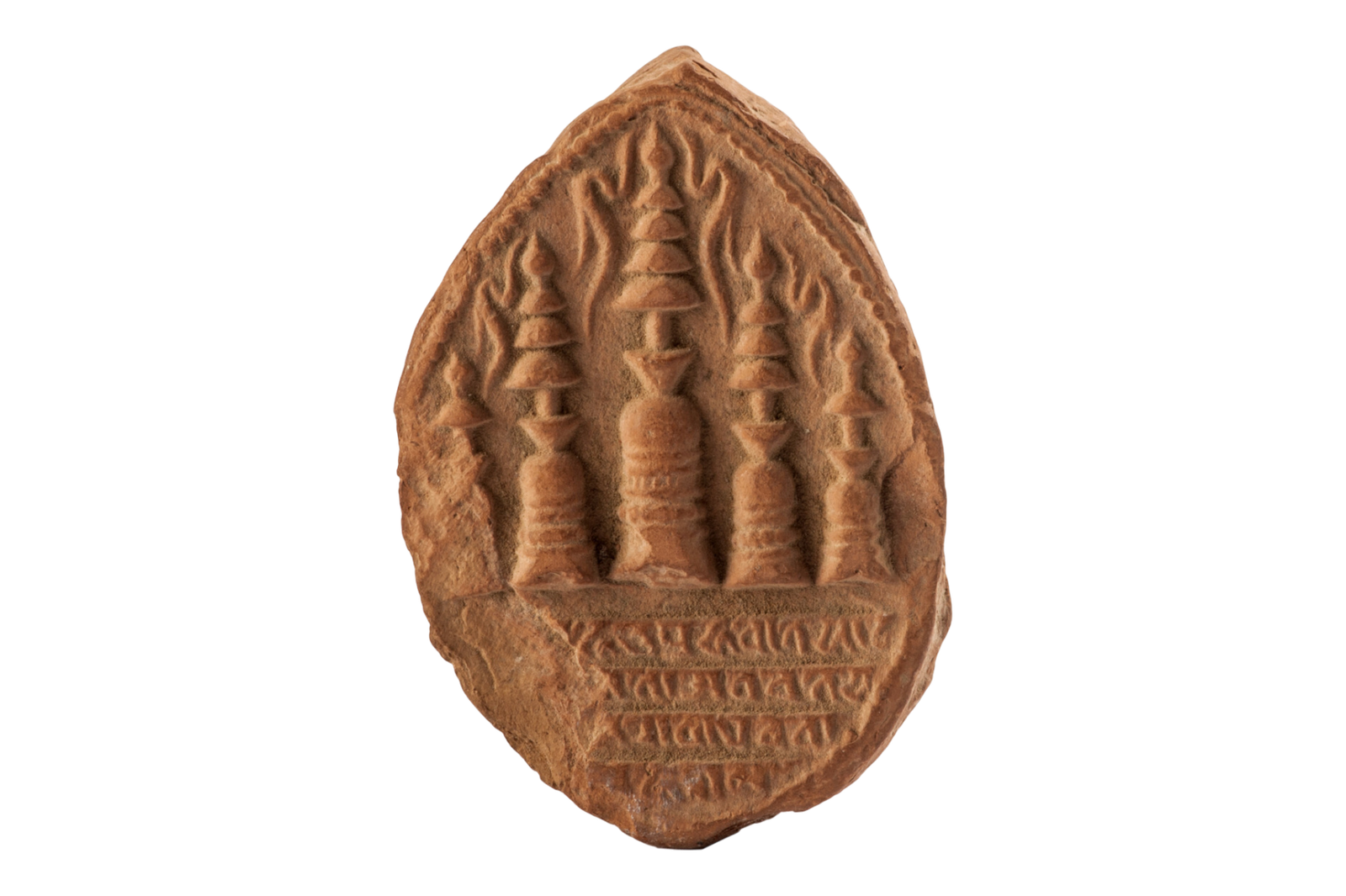
This oval-shaped votive terracotta seal is divided into two portions- the upper portion has a row of five stupas and the lower portion bears the inscription of dependent origination or pratityasamutpada. The stupa signifies the Mahaparinirvana of Buddha and the idea of enlightenment. Such votive tablets were used by the monks for their devotion or taken away by the pilgrims as memoirs visiting the Nalanda monasteries. A large number of similar clay moulds with the Buddhist creed in Pali, and iconic forms of Buddha and bodhisattvas have been discovered from central and north-east Thailand, ascribable to the Dvaravati period (ca. 7th -9th centuries CE).
The lower part of the seal is inscribed with the Buddhist creed, which frequently appears on Pala-period inscriptions and artworks written in the Siddhamatrika script, is known as the Ye dharma hetu verse. It is a core summary of the Buddha’s teaching on dependent origination (Pratityasamutpada).
It says:
Ye dharmā hetu-prabhavā hetuṃ teṣāṃ tathāgato hy-avadat
Teṣāṃ ca yo nirodho evaṃ vādī mahā-śramaṇaḥ
The standard translation is:
Of those phenomena which arise from causes, those causes have been taught by the Tathāgata (Buddha), and also their cessation. Thus taught the Great Śramaṇa (Great Recluse).