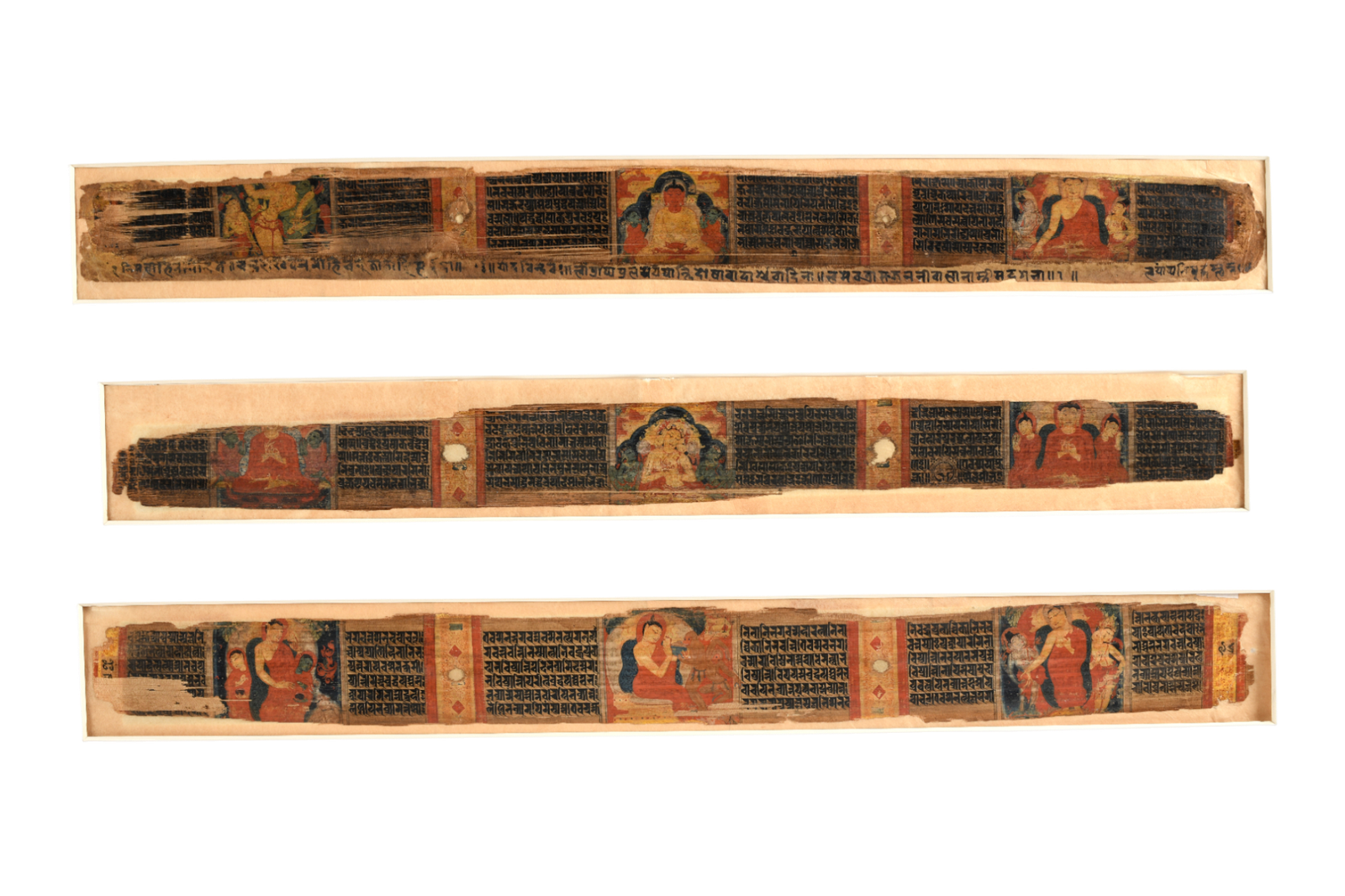
The three palm-leaf folios of the Aṣṭasāhasrikā Prajñāpāramita text date to the 12th century CE from the Pala period. The second folio features Prajñāpāramita in the center, surrounded by Buddha images in a preaching pose, representing his first sermon and a miracle at Śrāvastī. The goddess is yellow-bodied, seated with two arms in a vajraparyaṅka position, showing the dharmachakra mudrā, with lotuses on either side holding a book. She is flanked by two blue-complexioned attendants.The other two folios depict events from Buddha’s life, beginning with his nativity in the first folio, followed by scenes of meditation and the earth-touching pose. The third folio shows the Buddha subjugating Nalagiri at Rajgir, a monkey offering him a honey bowl at Vaiśāli, and his descent from Trayatrimsa heaven at Sankissa. Although the Mahāparinirvvāṇa scene is absent, the layout reflects the Aṣṭa-Mahā-Pratihārya theme common in Pala sculptures, highlighting wisdom in his teachings.