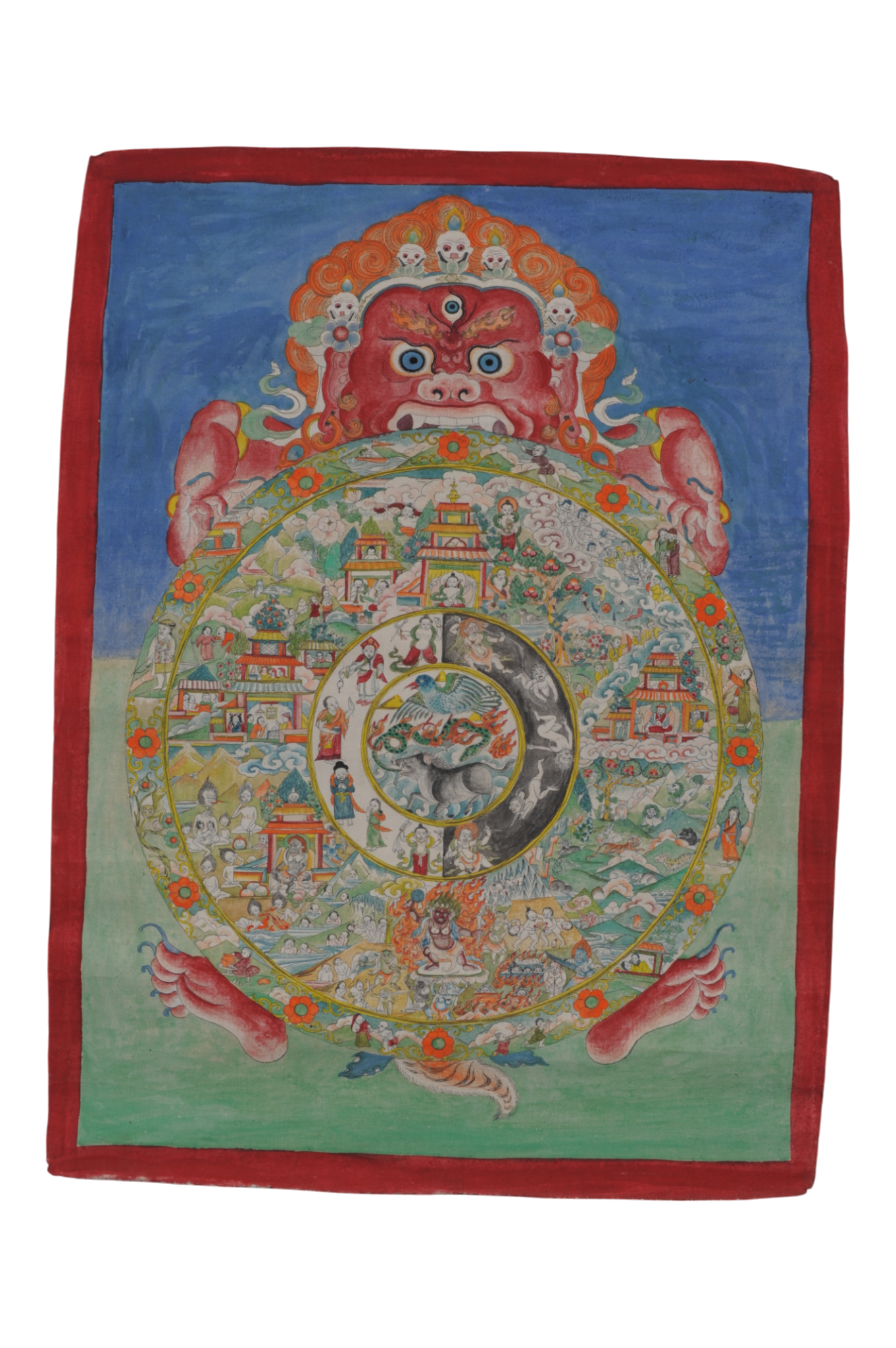
The bhavachakra, a significant concept in Buddhism, illustrates the perpetual cycle of rebirth that is influenced by the law of dependent origination (pratītya-samutpāda). This representation is often depicted as a wheel held by a creature, serving as a reminder of the transient nature of existence. At the core of the wheel, we find the three primary undermining forces: a red dove symbolising passion, a green snake representing anger, and a black pig denoting ignorance. The sections between the centre and the rim are divided by spokes into five (or in some interpretations, six) distinct realms, each reflecting the various forms into which an individual may be reborn: the realms of gods, titans (when six realms are referenced), humans, animals, ghosts, and demons. Surrounding the rim are the 12 nidānas, or interconnected phases of existence, presented symbolically, including ignorance, karman formations, rebirth consciousness, mind and body, sense organs, contact, sensation, craving, grasping, becoming, birth, and old age and death.