Relic Gems of Sakyamuni Buddha
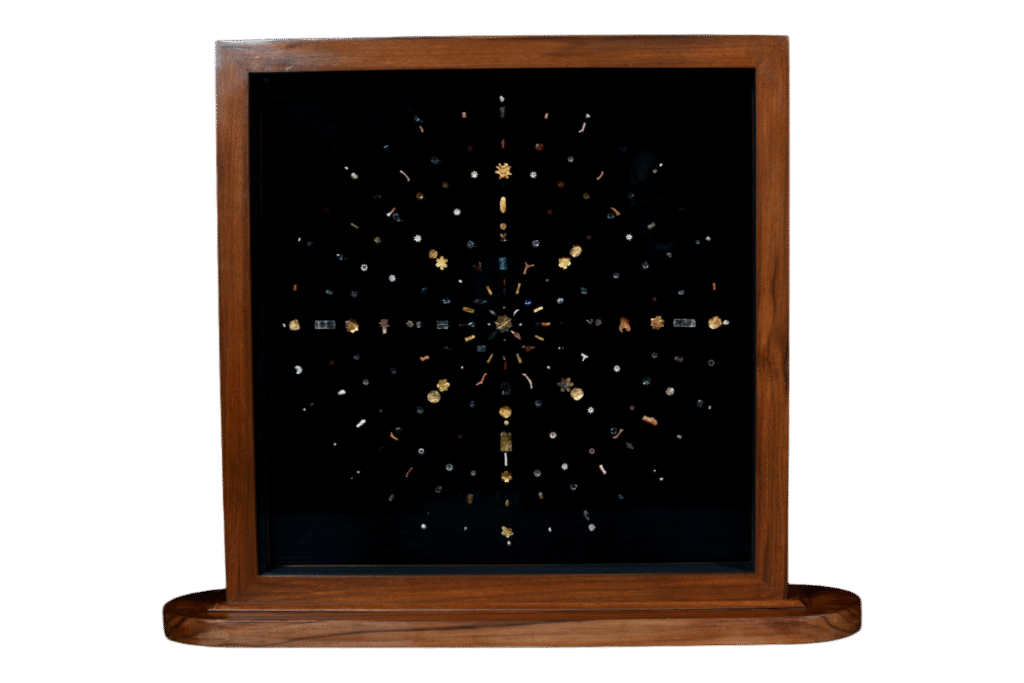
In 1898, William Claxton Peppé discovered the Piprahwa gem relics, which led to 349 gem relics being placed under his custody. A significant portion of these relics became part of the Imperial Museum in Calcutta, now known as the Indian Museum in Kolkata. The museum classified these relics as ‘AA’ antiquities, which prohibited their sale […]
Relic Gems of Sakyamuni Buddha
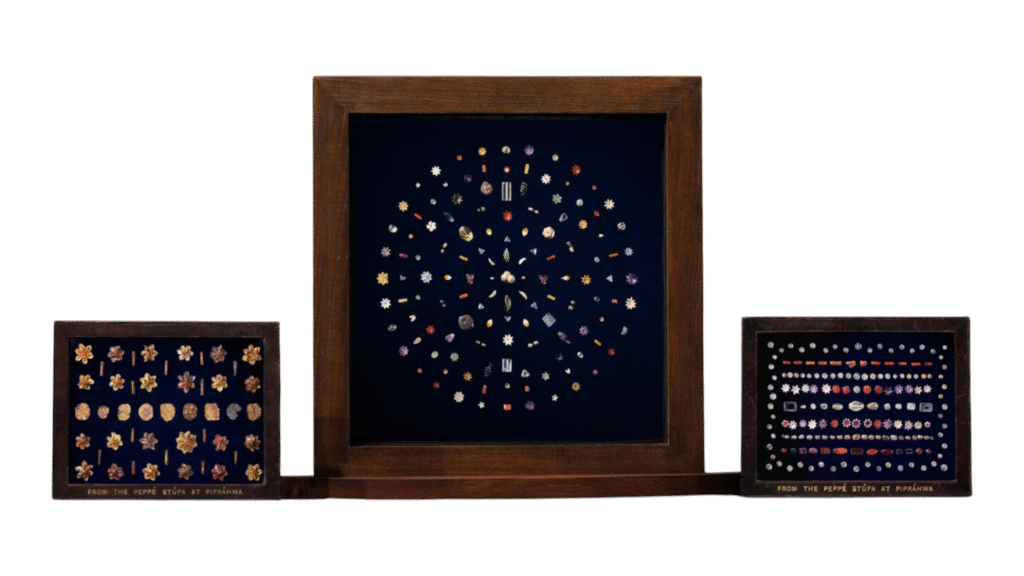
The Buddha relics from Piprawaha were unearthed by William Claxton Peppé in 1898. These gems, consisting of semiprecious stones, gold and silver leaf, pearls, and beads shaped into emblems such as tri-ratna, bird, leaf and lotus motifs etc. These were carefully mounted between glasses in three separate frames shortly after their excavation. The Peppé family […]
The Holy Buddha Relics
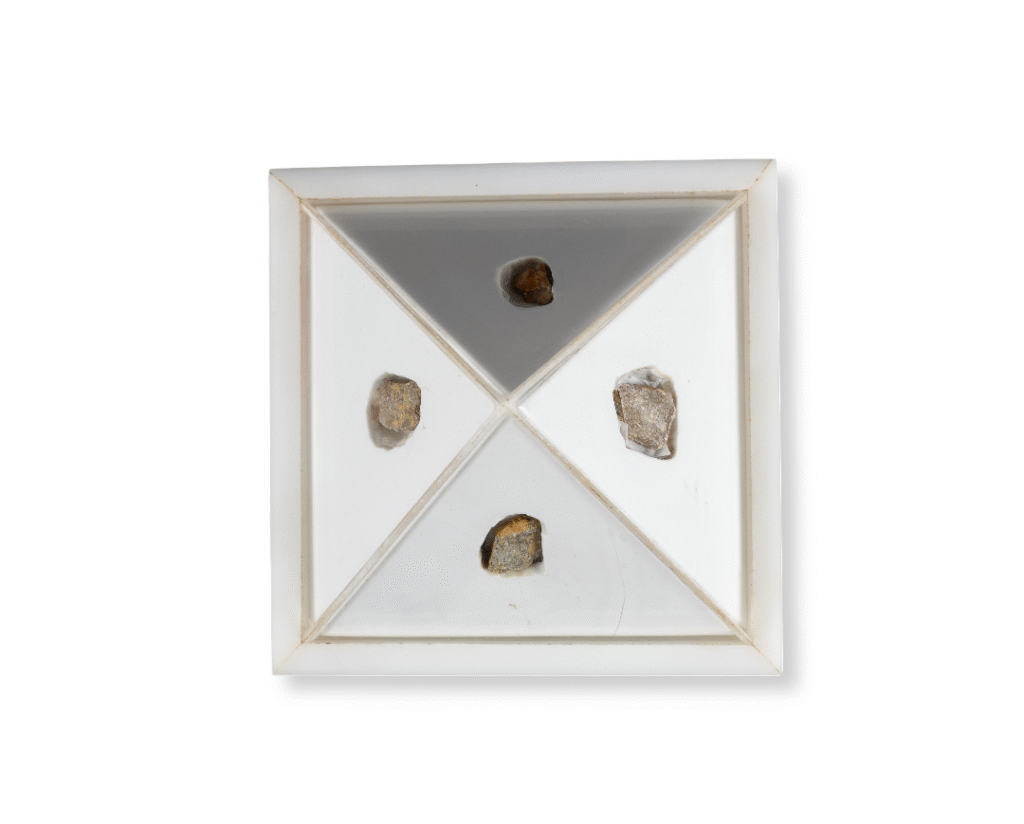
The discovery of the Buddha’s bone relics (Sarira-Dhatu) occurred at Piprahwa in the Siddharthnagara district of Uttar Pradesh, where in 1898, British engineer William Claxton Peppe excavated a stone casket containing five smaller urns with the Buddha’s bone fragments, ashes, gems, and gold ornaments, with an inscription linking them to the Buddha and his Shakya […]
Votive seal
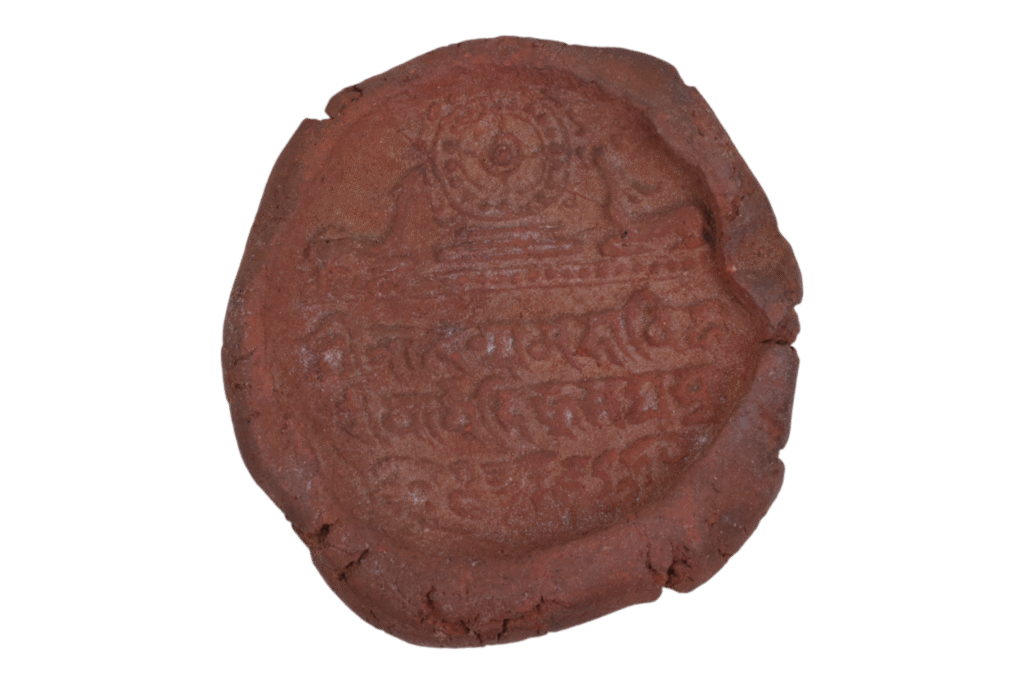
This terracotta seal from Nalanda Mahavihara features a detailed depiction of a deer alongside a wheel symbol, which together represent significant concepts in Buddhist philosophy. The inscription on the seal highlights the principle of dependent origination, known in Sanskrit as pratityasamutpada. This fundamental teaching emphasises the interconnectedness of all phenomena, illustrating how all things arise […]
Upendra Maharathi- Sujatha offering Milk Rice (Kheer) to Lord Buddha
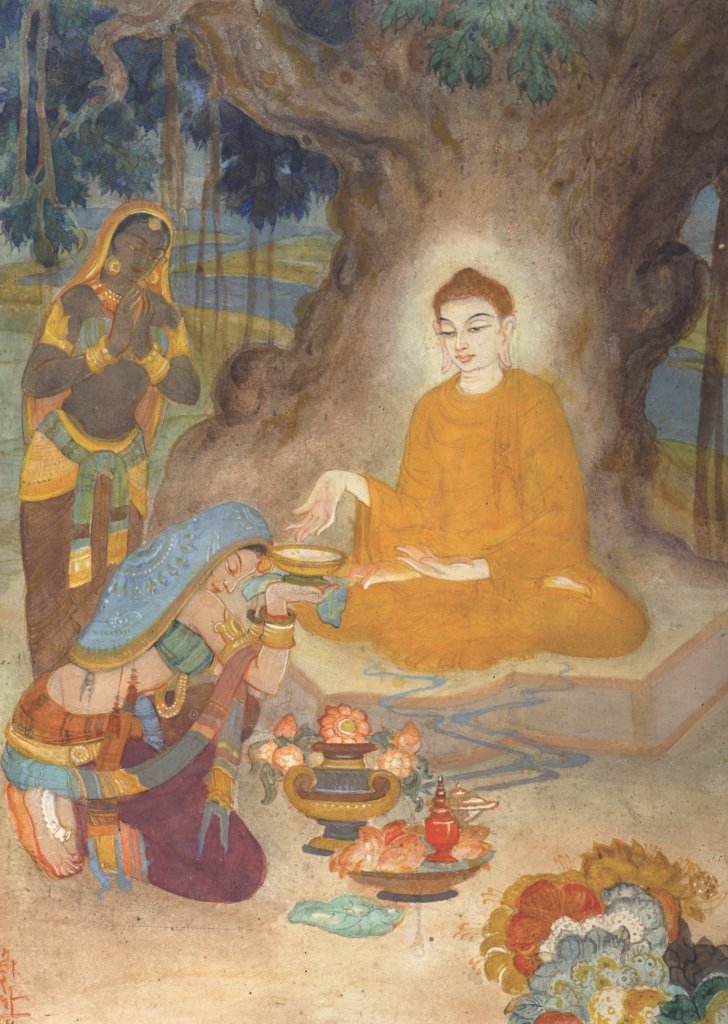
Upendra Maharathi beautifully reimagines a pivotal episode from Buddhist history — the moment Sujata, revered as the first Upāsikā, offers kheer to the emaciated Siddhartha Gautama. This act of compassion not only restored his strength but inspired his realization of the Middle Path, balancing austerity and indulgence.
The Eight Great Bodhisattvas (Ashtamahabodhisattvas)
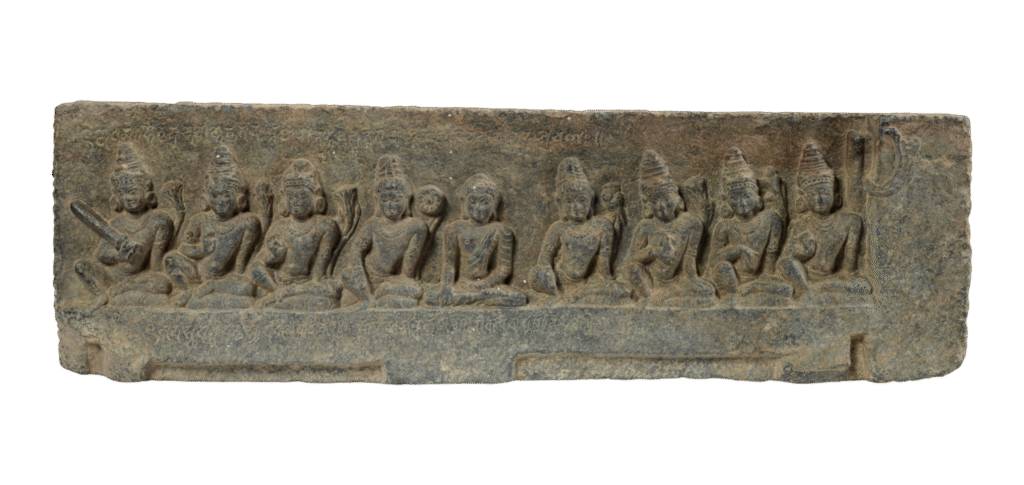
Theravada and Mahayana Buddhism emphasize Bodhisattvas, who serve as saviors by sacrificing their own salvation to help others. In this Pala period sculpture, all eight Bodhisattvas (ashtamahabodhisattva) appear similar in posture, wearing royal clothing and tall conical crowns. At the center, the Buddha sits in an earth-touching pose (bhumisparshamudra), with his robe covering one shoulder […]
Panel showing Transcendental Buddhas (Panchatathagatas)
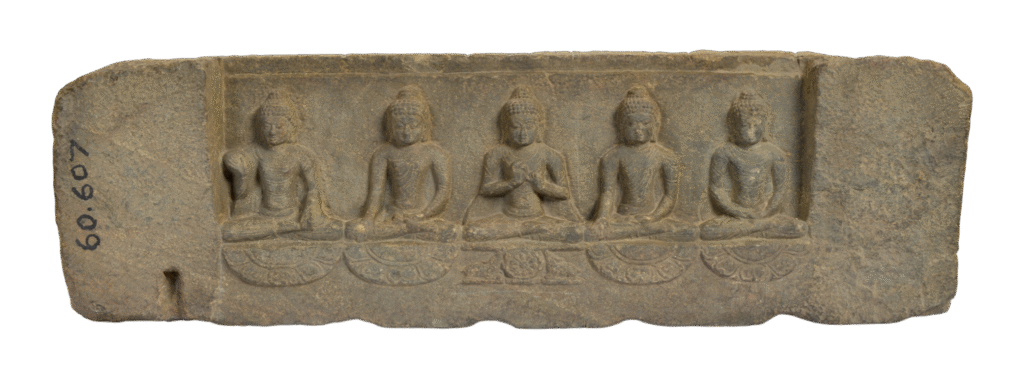
Vajrayana Buddhism introduced the concept of Transcendental Buddhas (panchatathagatas), expanding the Buddhist pantheon with five Buddhas: Amitabha, Akshobhya, Vairochana, Amoghasiddhi, and Ratnasambhava. These Buddhas represent the celestial body (sambhogakaya) and are considered emanations of the primordial Adi Buddha. They are identifiable by their specific iconographic attributes, mudras, and asanas. In Pala sculptures, they often appear […]
Inscribed brick from Nalanda
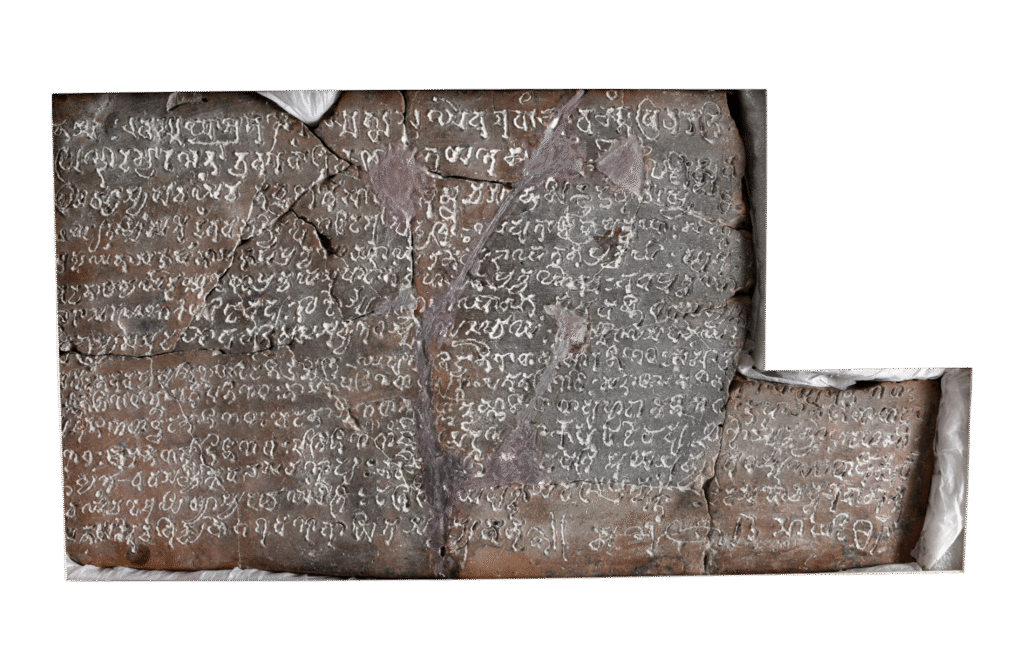
An inscribed brick from Nalanda gives the text of the Nidhana Sutra or the Pratitya Samutpada Sutra together with the Nirodha portion called the achaya and the apachaya of dharmna. It was found in 1936-37 from the core of a votive stupa attached to the main stupa of Nalanda originally found in pieces; it has now been pieced together and contains 15 lines of writing with the upper right portion […]
Vessantara Jataka
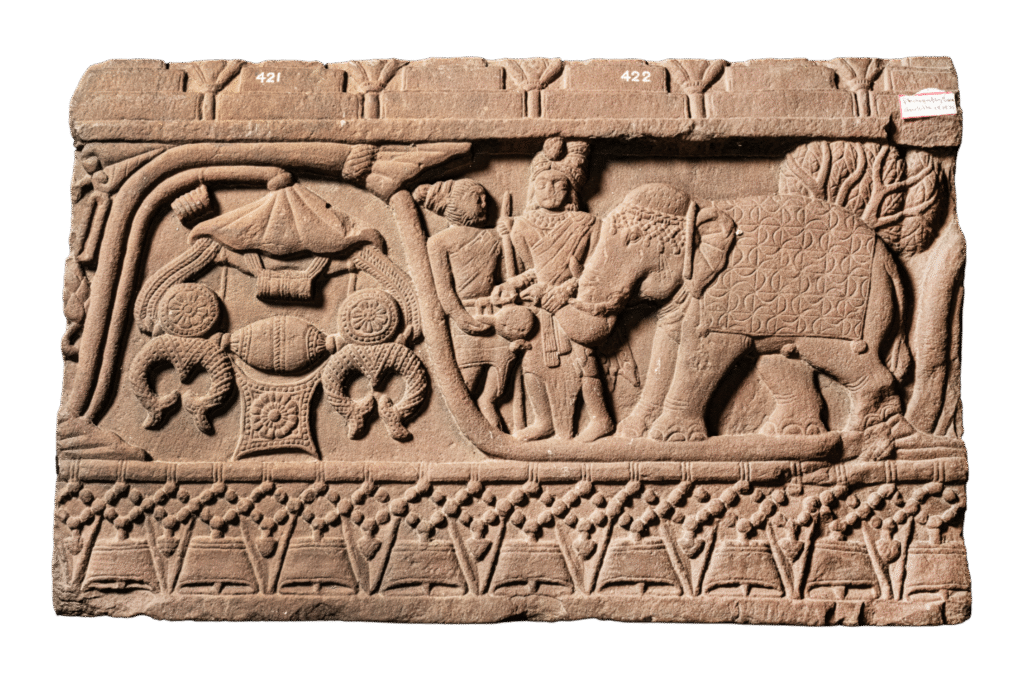
This coping stone fragment depicts the Vessantara Jātaka, illustrating the Bodhisattva’s supreme virtue of generosity (dāna). Born as Prince Vessantara, he donates his rain-bringing white elephant Peccaya to a Brāhmaṇa from Kaliṅga, symbolizing selfless giving. The panel shows the prince offering the elephant with ritual pouring of water. The panel depicts this moment of offering, […]
Dipankara Jataka
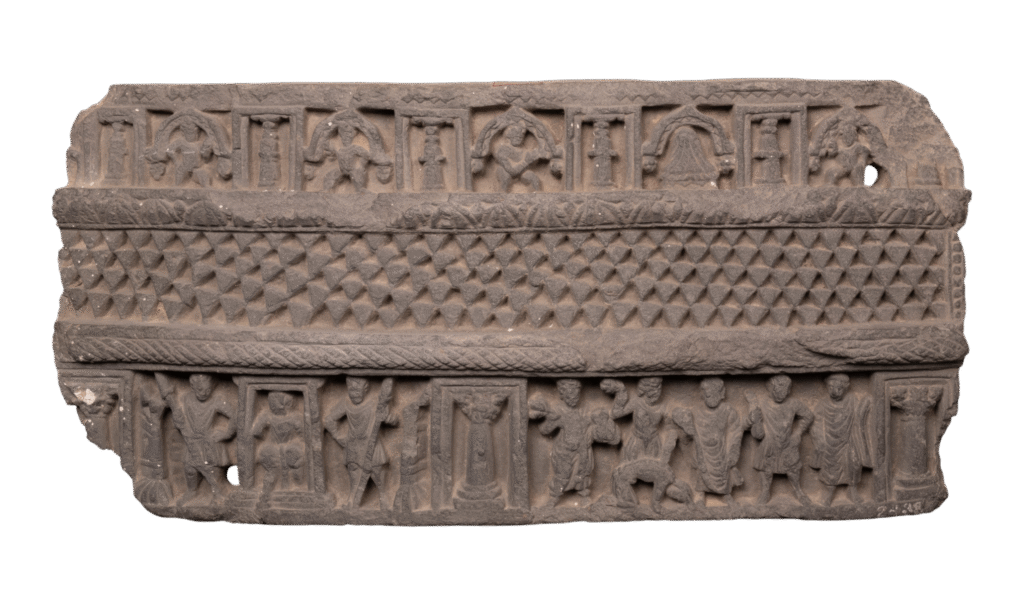
This Gandhara schist relief from the 2nd century CE illustrates the Dipankara Jataka, one of the earliest stories from the Buddha’s past lives. The scene shows Dipankara Buddha being honored by the ascetic Sumedha, who prostrates before him, foretelling his future enlightenment as Sakyamuni Buddha. Rich architectural motifs and attendant figures surround the central scene, […]