The Adoration of the stupa

This 12th-century palm-leaf folio (Accession No. 62.115), created during the Pala period of Eastern India, depicts celestial Buddhist deities in reverence of a prominent stupa. Measuring 5 x 53.6 cm and painted with natural pigments, it reflects the blend of devotional art and sacred text. Central to the artwork is the stupa, symbolising enlightened truth, […]
Mahaparinirvana
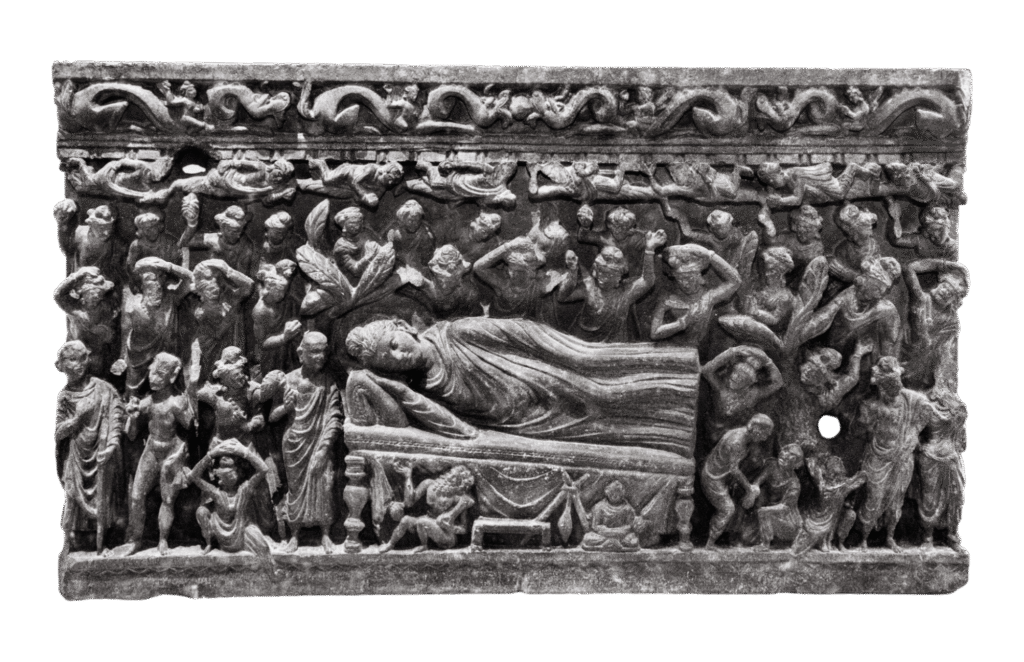
This relief panel illustrates the Mahāparinirvāṇa, depicting the Buddha’s passing at Kuśinagara – his liberation from saṃsāra. The Buddha reclines serenely on a couch, surrounded by grieving disciples—Ānanda stands at his feet, while Mahākāśyapa, Subhadra, and Vajrapāṇi mourn nearby. Vajrapāṇi, shown holding the vajra, appears as the devoted protector. The panel embodies early Buddhist funerary […]
Votive stupa showing life scenes of Gotama Buddha
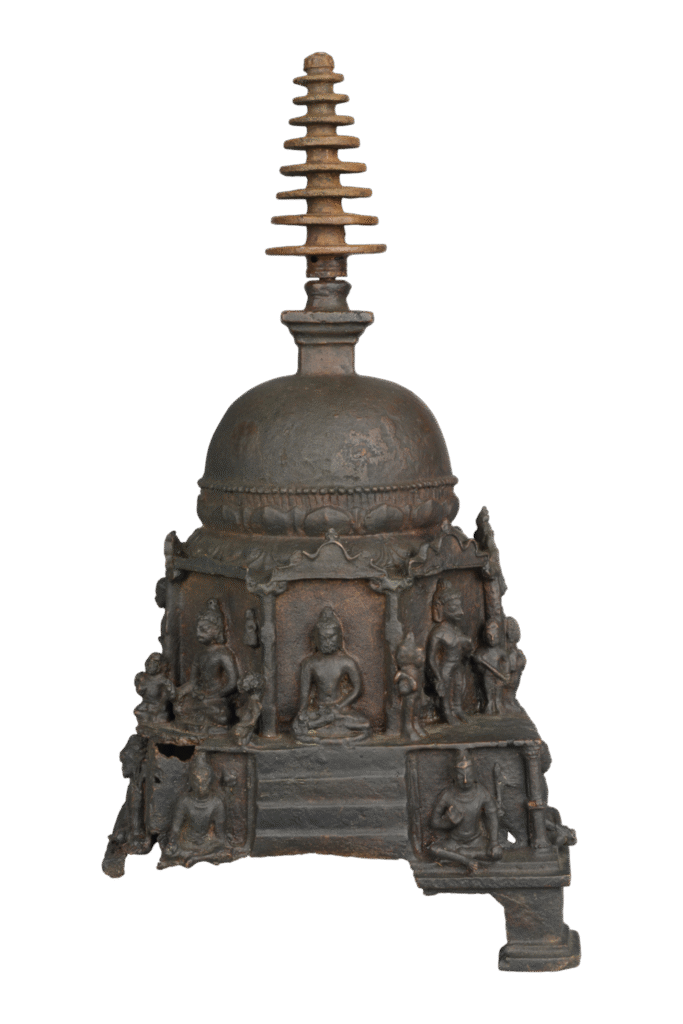
This votive stupa features an intricate chattravali and dome, supported by an octagonal drum on a square pedestal. Its eight panels display foliate niches illustrating key scenes from the life of Sakyamuni Buddha, accompanied by celestial Buddhas at the corners. The square base has steps and seated Bodhisattvas with unique attributes. By this time, the […]
Arup Das- Life of Buddha
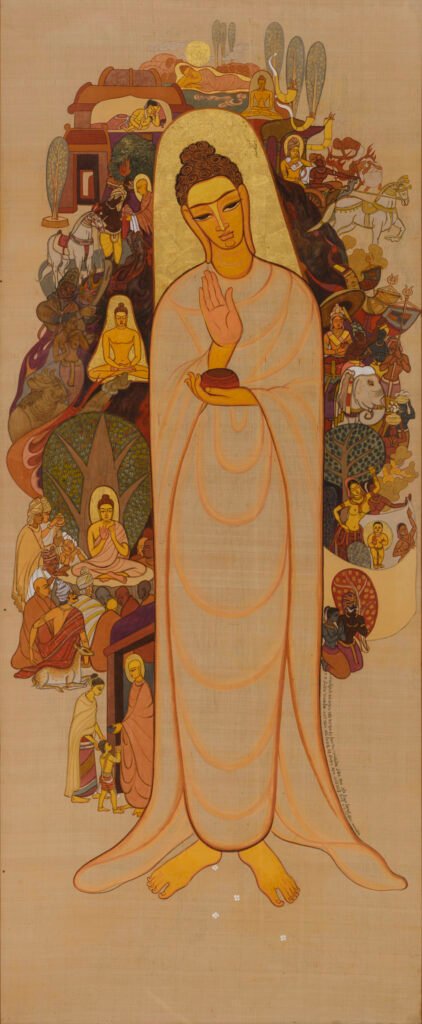
Arup Das’s painting of the Buddha, a historical narrative brought to life on canvas, is a sophisticated example of how Modern Indian artists navigated their double inheritance. It is a work that is simultaneously a devotional icon, a historical narrative, and a modernist exploration of the monumental human form.
Worship of Dharma Chakra
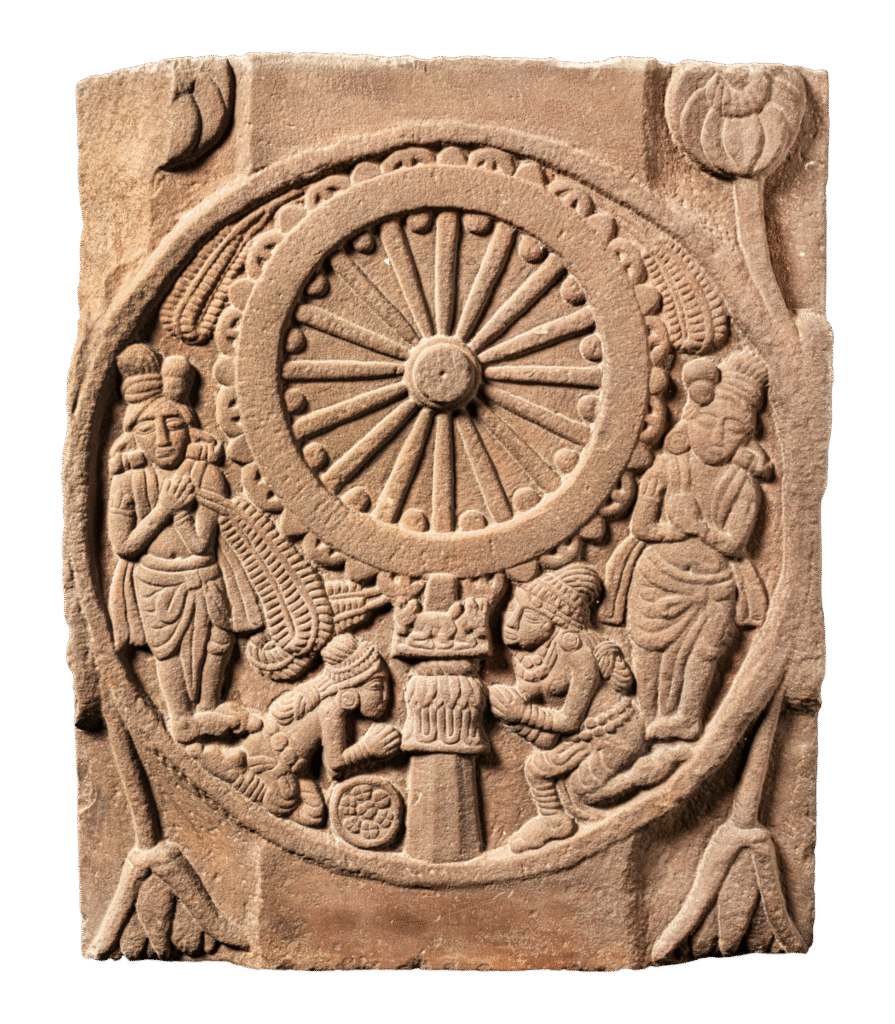
This red sandstone relief from Bharhut, depicts the worship of the Dharma Chakra, symbolizing the Buddha’s first sermon and the turning of the Wheel of Law. The central wheel represents universal truth and cosmic order, surrounded by devotees in anjali mudra, offering homage and reverence. Carved with delicate detail typical of early Buddhist art, this […]
Elizabeth Brunner- Walking Buddha
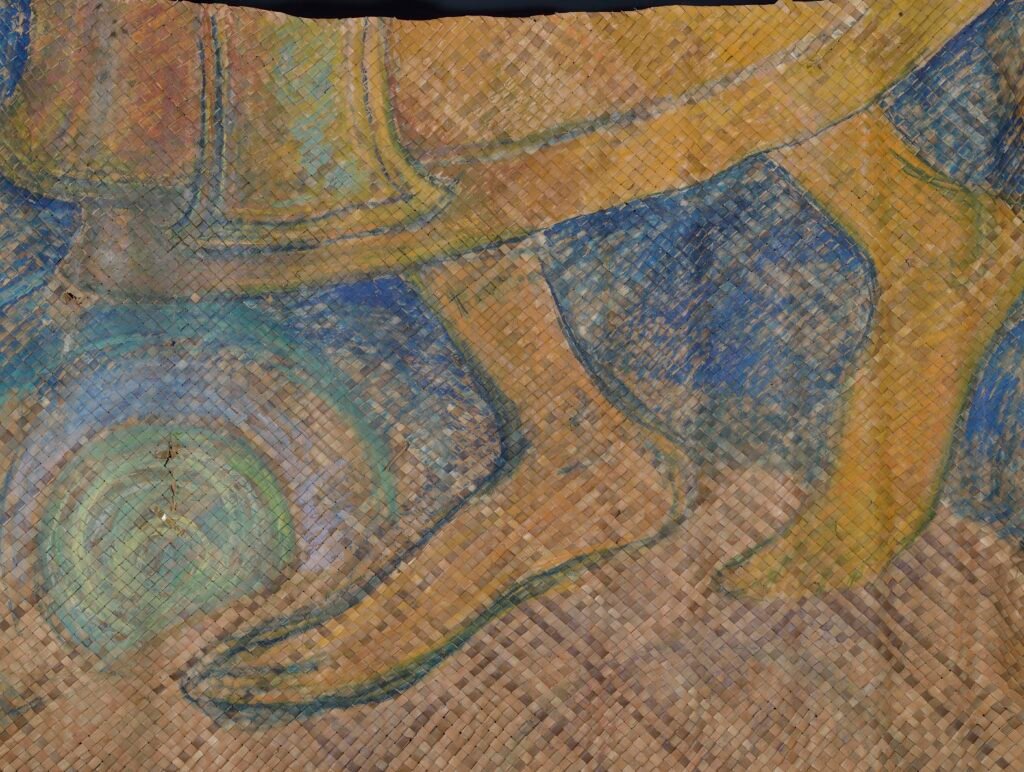
The work features a close-up of the Buddha’s feet captured in a walking position, a deliberate artistic choice that transforms the traditional, static Buddhapada (footprint) into a modern icon. This representation is powerful, suggesting Buddha’s teachings as a dynamic “way forward” amidst the chaos and trauma of Brunner’s contemporary world. The use of rough woven […]
Upendra Maharathi- Buddha in Meditation
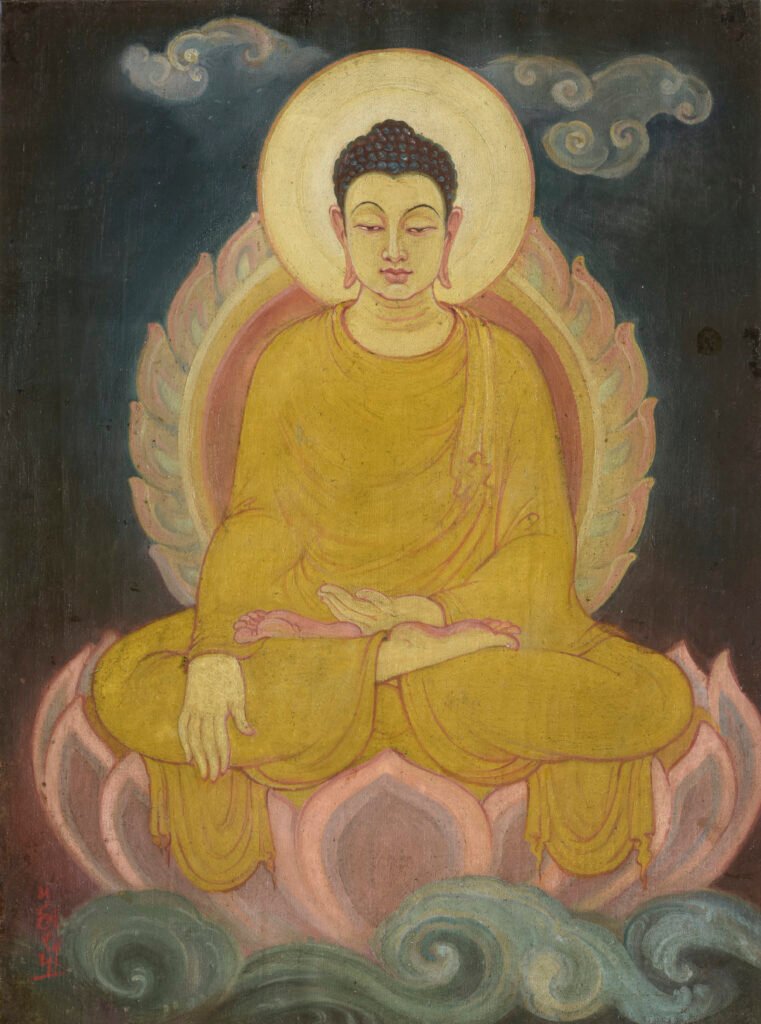
This painting depicts Buddha in a meditative pose, seated on a stylized lotus throne surrounded by ethereal clouds. The halo around his head emphasizes enlightenment. The use of subtle shading and the delicate contours of the robes evoke both grace and tranquility, while the lotus motif symbolizes purity and spiritual awakening.
Thangka of Shakyamuni Buddha
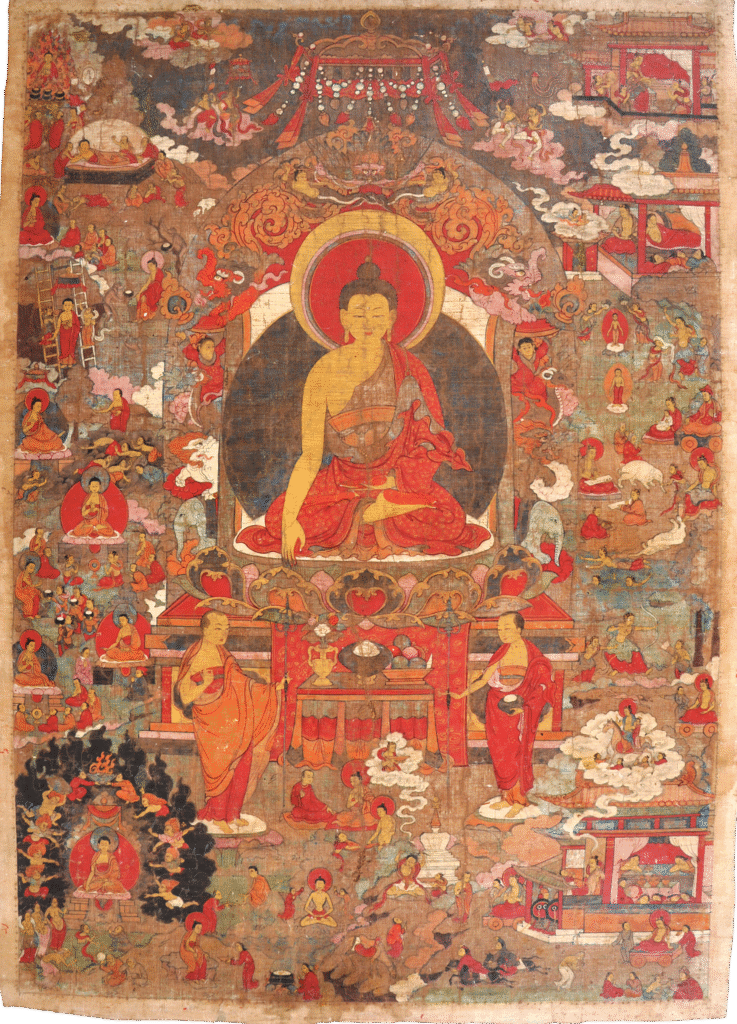
A thangka of Shakyamuni Buddha depicting the twelve deeds is a traditional Tibetan Buddhist painting that illustrates the twelve significant events in the life of the historical Buddha, from his descent from Tushita Heaven to his final Parinirvana. These paintings visually narrate his journey toward enlightenment, typically arranged in an anti-clockwise direction and culminating in […]
Prajnaparamita, and Life Scenes of Buddha, Folios of Astasahasrika Prajnaparamita sutra
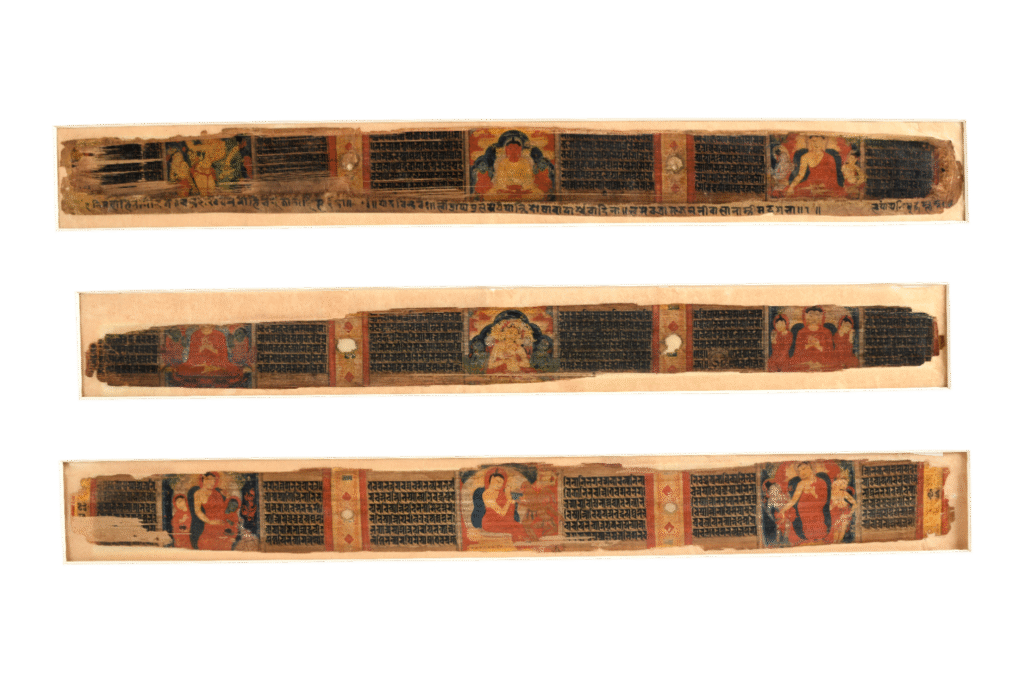
The three palm-leaf folios of the Aṣṭasāhasrikā Prajñāpāramita text date to the 12th century CE from the Pala period. The second folio features Prajñāpāramita in the center, surrounded by Buddha images in a preaching pose, representing his first sermon and a miracle at Śrāvastī. The goddess is yellow-bodied, seated with two arms in a vajraparyaṅka […]
Upendra Maharathi-The Miracle of Śravasti (Yamaka-paṭiharya)
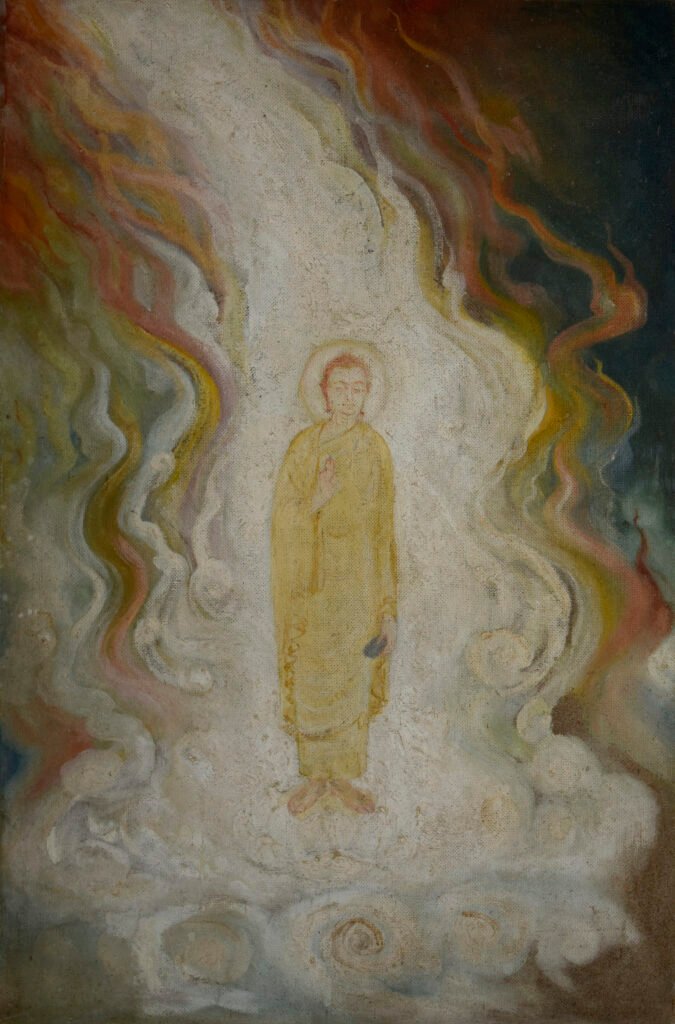
In a unique take on the miracle of Shravasti, Buddha, amidst fire, is rendered with ethereal beauty and inner peace. The artist contrasts the profound serenity of the Buddha, depicted with delicate, idealised features and closed eyes, with the dynamic, flowing background. The work blurs the line between figuration and abstraction. The soft focus and […]