Buddha’s Visit to Kapilavastu & Ordination of Rahul
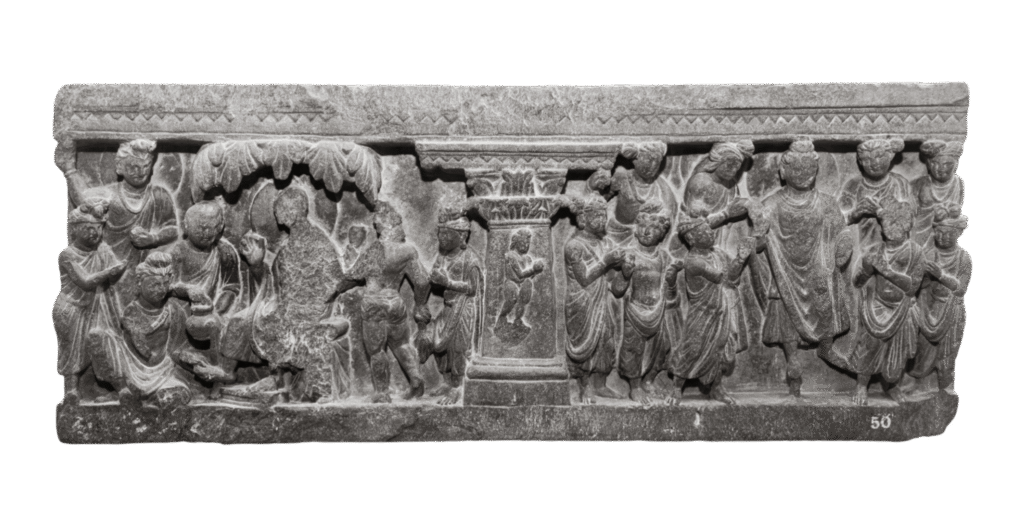
This Gandhara schist relief, illustrates two key moments from the Buddha’s life- his visit to Kapilavastu and the ordination of his son Rahula. The Buddha, depicted with a halo, stands serenely among richly draped figures in Greco-Buddhist style. The composition captures emotional reverence and human interaction through detailed carving and naturalistic posture. Characteristic of the […]
Ashtasahasrika Prajnaparamita Sutra
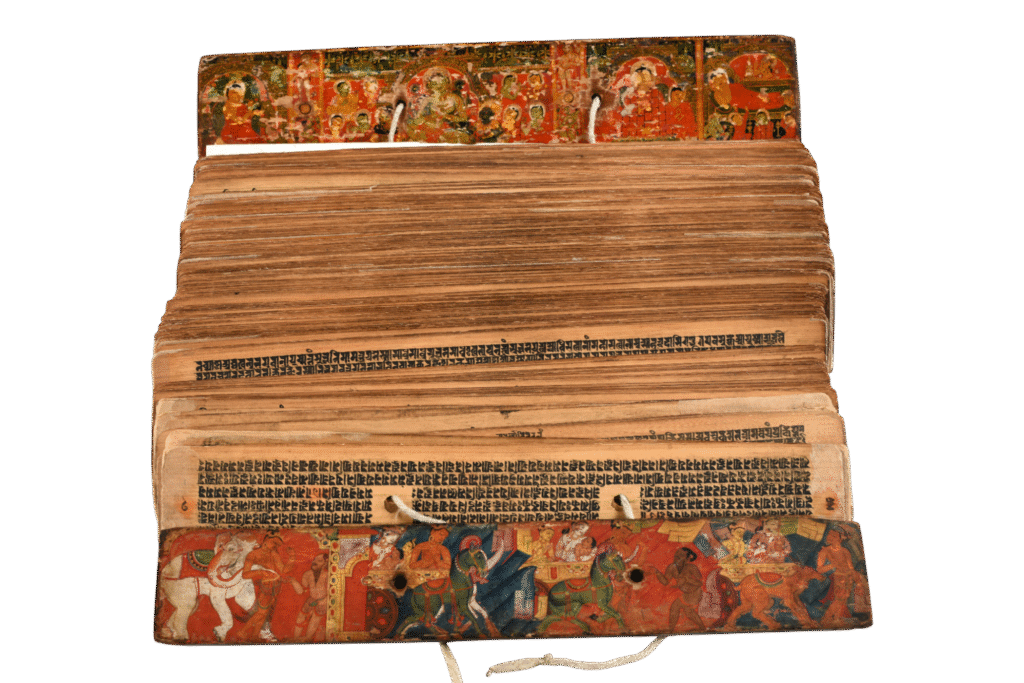
A pair of the painted cover of the Ashtasahasrika Prajnaparamita Sutra for a palm-leaf manuscript belongs to the Pala-Nepalese tradition. The manuscript was transcribed in Nepal Samvat 470 (1350 AD) by Vajracharya Bandhugupta during the reign of Jayarjunadeva. The artistic rendition stylistically looks back at the Ajanta murals. The front cover consists of four compositions, in which the middle two […]
Miracle of Sravasti
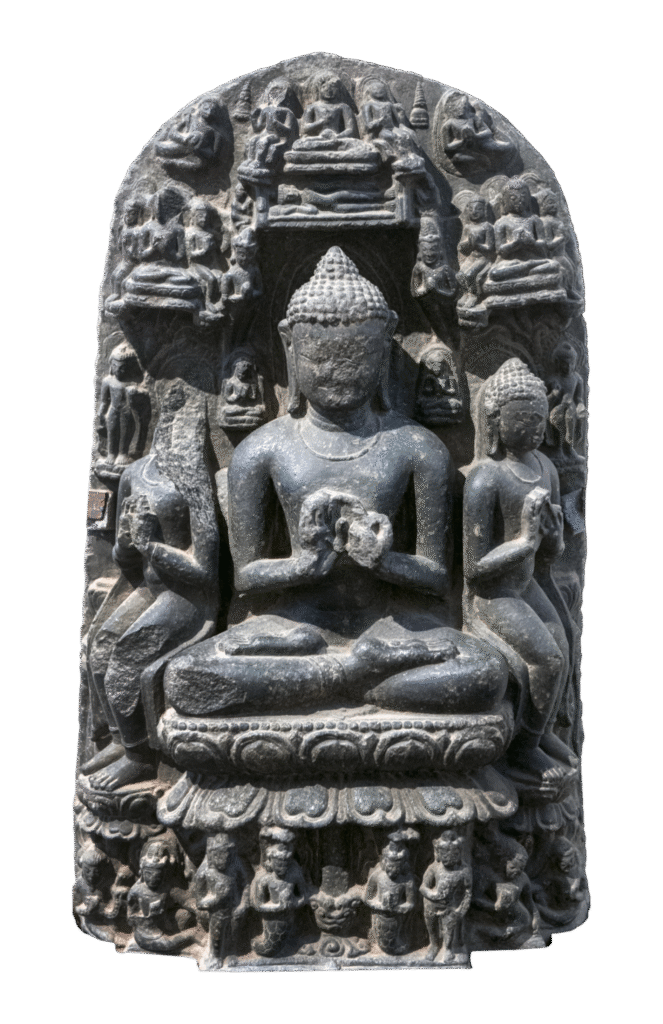
The Seated Buddha in Dharmachakra Pravartana Mudra from Bihar, created during the Pala period, represents the Buddha preaching his first sermon at Sarnath. Carved in black basalt, the Buddha sits cross-legged on a double-lotus throne, flanked by attendant bodhisattvas and smaller Buddhas. His hands form the Dharmachakra Mudra, symbolizing the Turning of the Wheel of […]
Stone Coffer
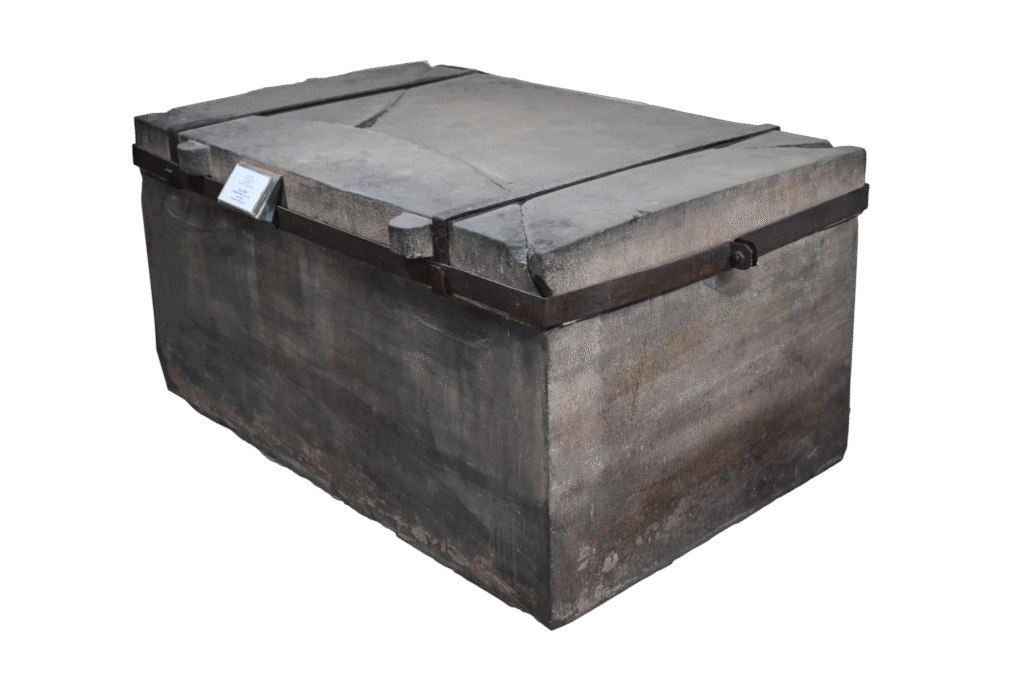
The coffer was the principal container for a sacred reliquary ensemble at Piprāhwā. Within it were placed beautifully crafted one crystal caskets and four soapstone caskets, including one inscribed in Brahmi script, declaring it to hold the relics of the Buddha himself, deposited by the Śākyas, the master’s kinsmen. Alongside the caskets, the coffer safeguarded […]
Crowned Buddha in Earth-touching pose (Bhumisparsha mudra)
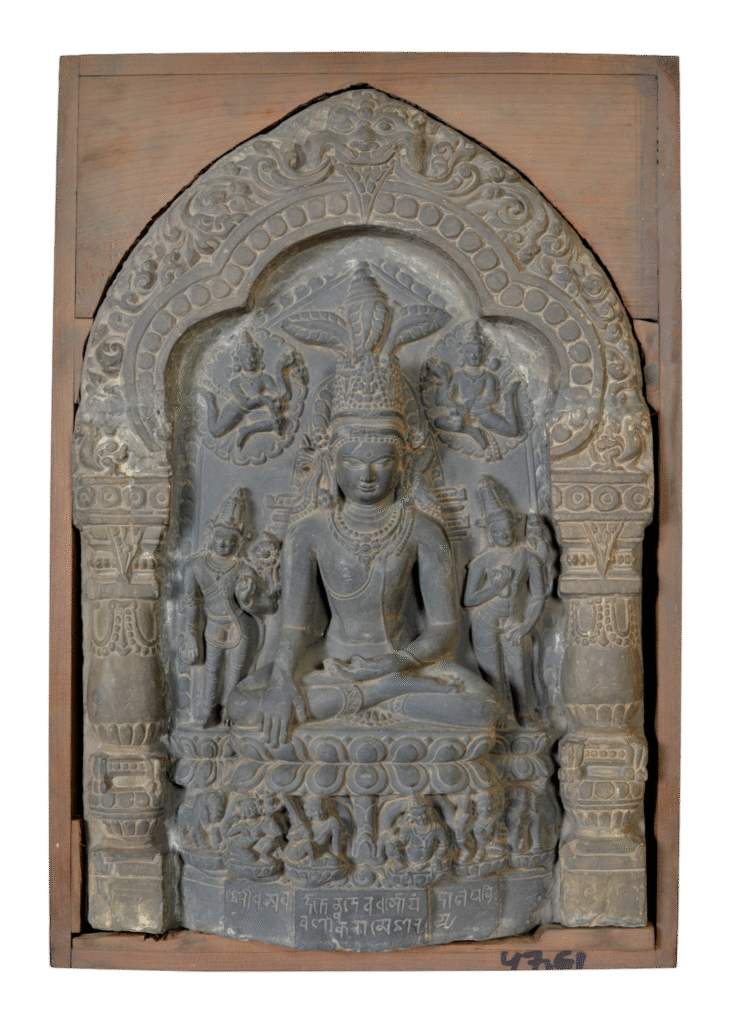
A crowned Buddha is depicted seated, cross-legged on a double lotus pedestal, displaying the bhumisparsha mudra, a gesture signifying the moment of enlightenment. This figure is framed within an intricately designed trilobed, arched shrine, adorned with motifs of the Bodhi tree and flanked by celestial figures bearing floral tributes. To the left and right of […]
Sealing
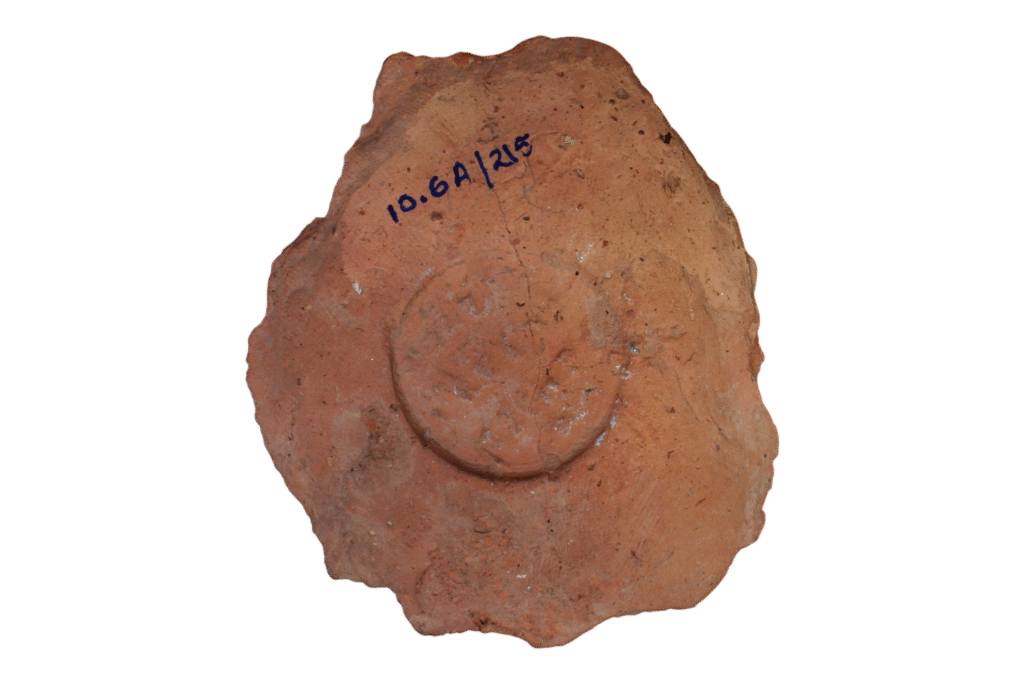
The terracotta sealings discovered at Piprahwa, primarily during the extensive excavations led by K. M. Srivastava (1971–1977), represent one of the most significant epigraphic finds for establishing the site’s identity as ancient Kapilavastu, the home of the Buddha. These artifacts are characteristically terracotta bear crucial inscriptions in the Brahmi script, which, based on paleography, are […]
The Eight Great Events of Buddha (Ashtamahapratiharya)
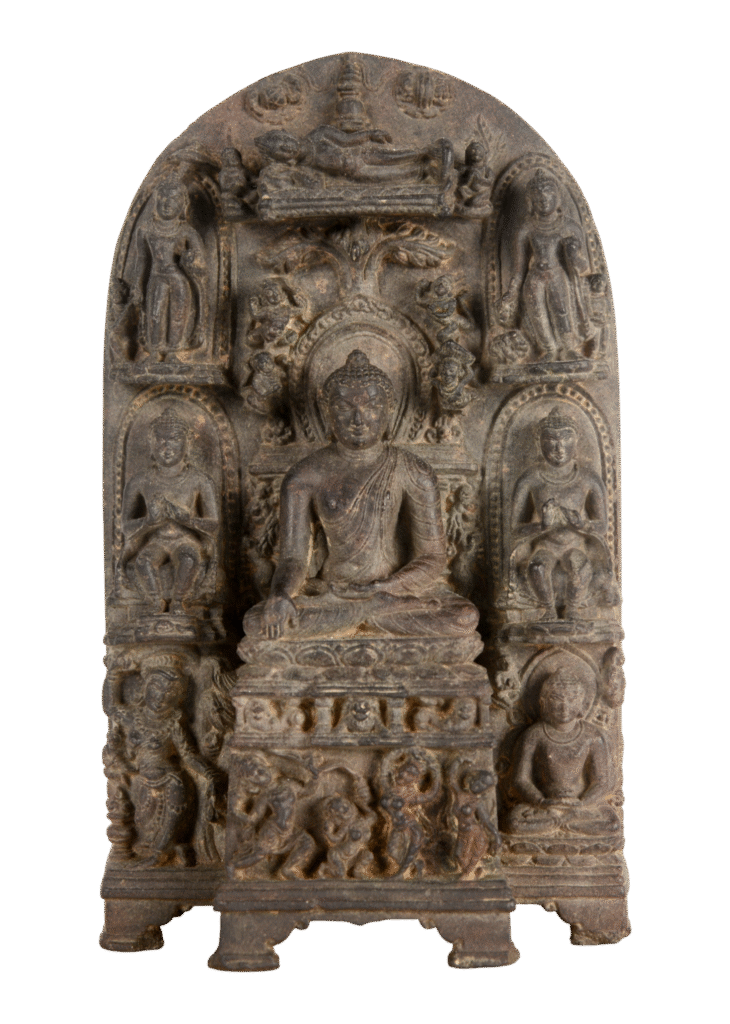
The miniature stele, depicting the eight great miracles (ashtamahapratiharya) from the Pala period, features the Buddha in the thunderbolt posture (vajraparyankasana) on a double-lotus pedestal beneath the bodhi tree, performing the earth-touching gesture (bhumisparsha mudra). The pedestal depicts the three daughters of Mara attempting to dissuade him from enlightenment, while Bhudevi witnesses the momentous event. […]
Sealing
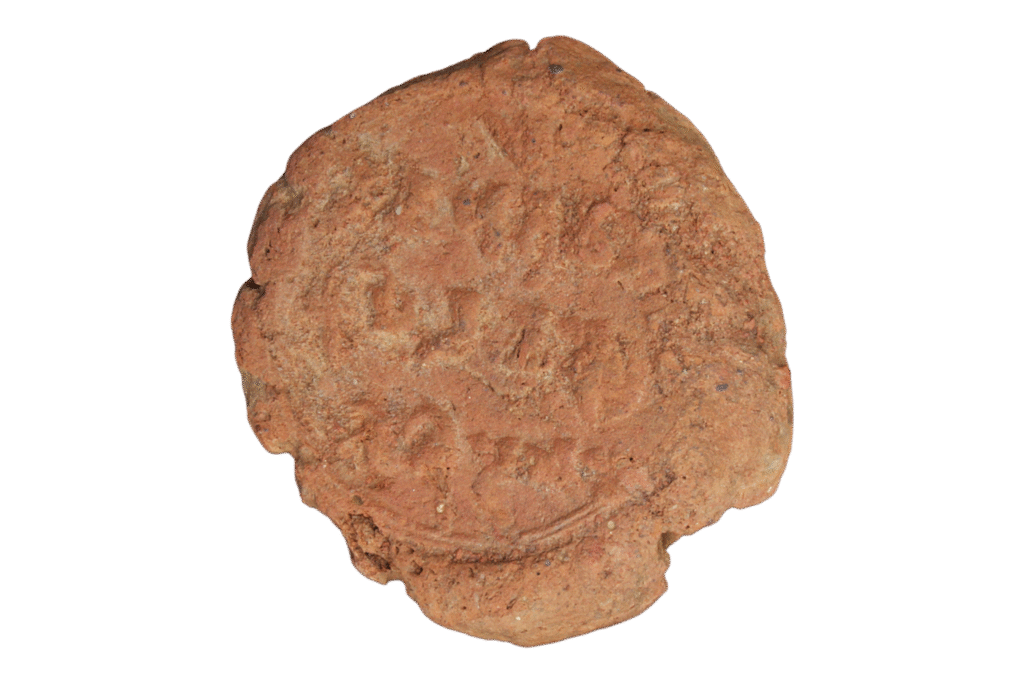
The terracotta sealings discovered at Piprahwa, primarily during the extensive excavations led by K. M. Srivastava (1971–1977), represent one of the most significant epigraphic finds for establishing the site’s identity as ancient Kapilavastu, the home of the Buddha. These artifacts are characteristically terracotta bear crucial inscriptions in the Brahmi script, which, based on paleography, are […]
Elizabeth Brunner – Guardians of the Swedagon Pagoda (Pagan)
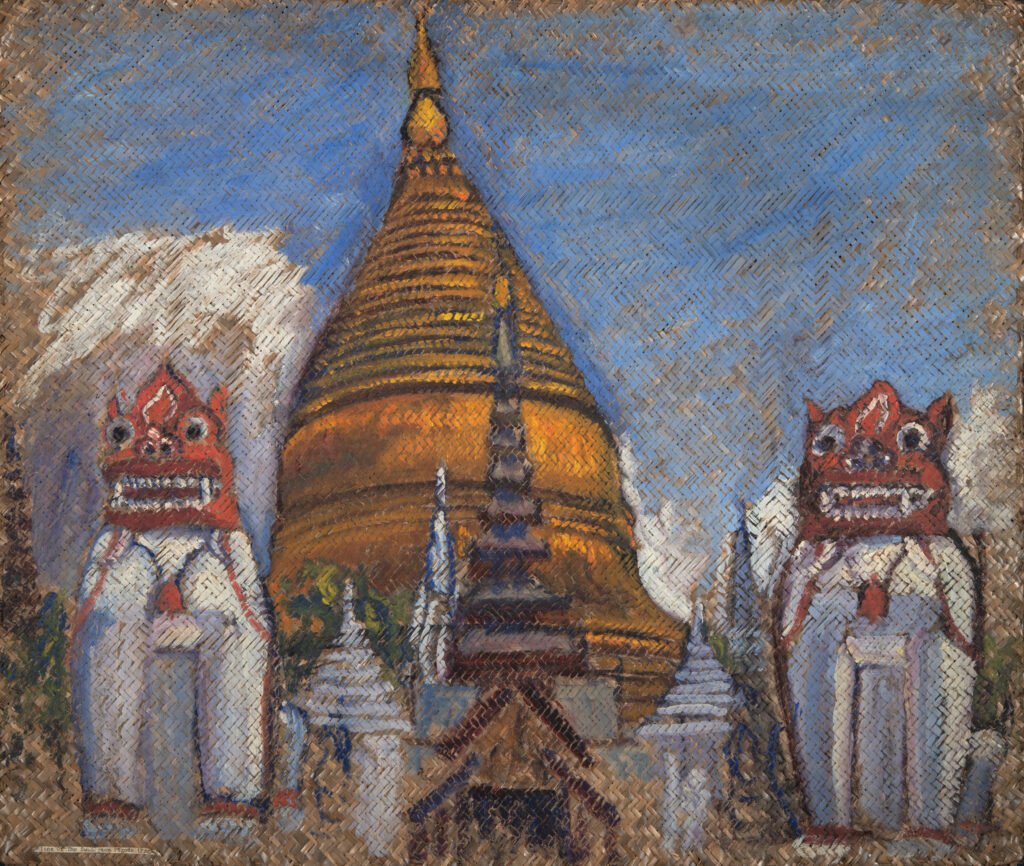
Elizabeth Brunner’s painting is an evocative depiction of the famous golden stupa in Yangon, Myanmar, flanked by its traditional Chinthe (lion-like guardian figures). The work captures the monumentality and protective aura of the sacred site. Executed in oil on a coarse woven mat, the artwork utilises the mat’s visible texture to lend the scene an […]
Life Scenes of Buddha
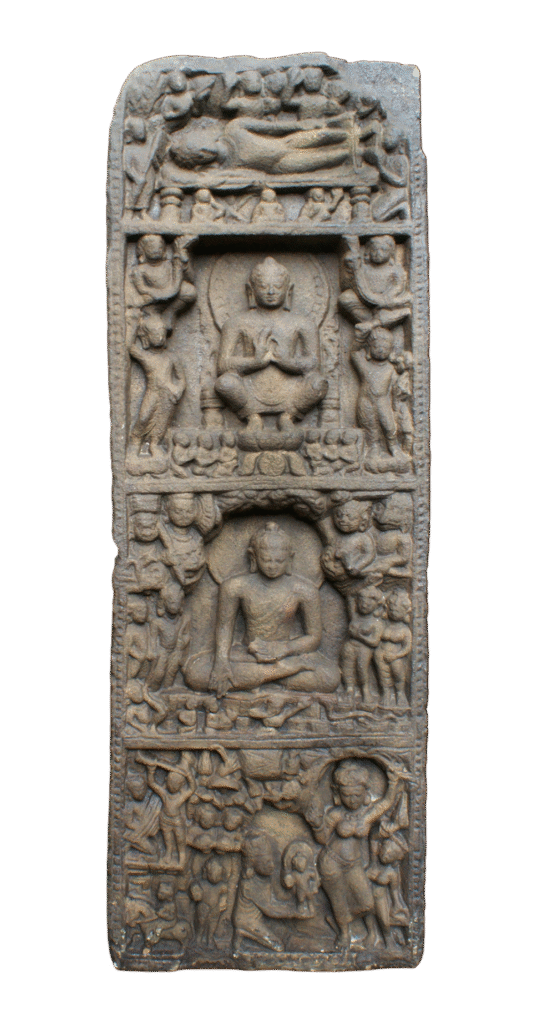
This exquisite relief depicts five principal episodes from the life of Śākyamuni Buddha — his birth, renunciation, enlightenment, first sermon, and Mahāparinirvāṇa. Beginning from the bottom, the scenes unfold sequentially: Queen Māyādevī giving birth, the Great Departure, the defeat of Māra, the Dharmacakra-pravartana at Sārnāth, and finally, the Buddha’s passing. Characteristic of the Sārnāth style, […]