Sealing
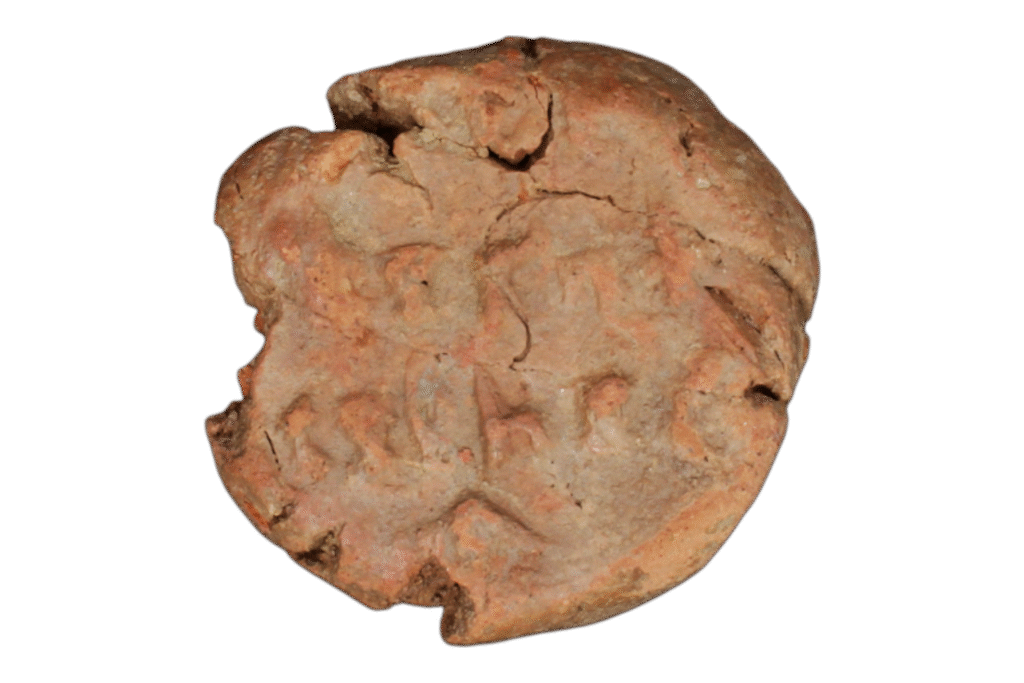
The terracotta sealings discovered at Piprahwa, primarily during the extensive excavations led by K. M. Srivastava (1971–1977), represent one of the most significant epigraphic finds for establishing the site’s identity as ancient Kapilavastu, the home of the Buddha. These artifacts are characteristically terracotta bear crucial inscriptions in the Brahmi script, which, based on paleography, are […]
Sri Lankan King receiving Sanghamitra
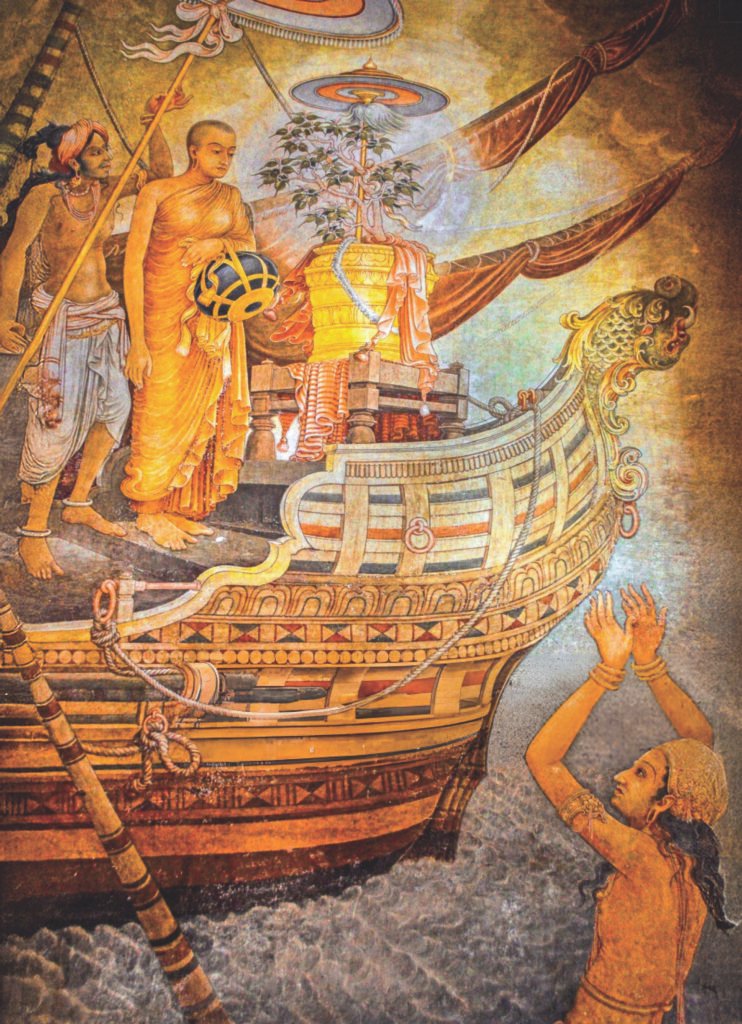
Solias Mendis’s 20th-century mural depicting Theri Sanghamitta’s arrival at Kelaniya Raja Maha Vihara captures a pivotal moment in Sri Lankan history with impressive detail. In a Neo-Classical style inspired by Ajanta, the mural features vibrant, earthy colours and highlights the event’s royal grandeur. It depicts Sanghamitta on an ornate ship, accompanied by the sacred Bodhi […]
Sealing
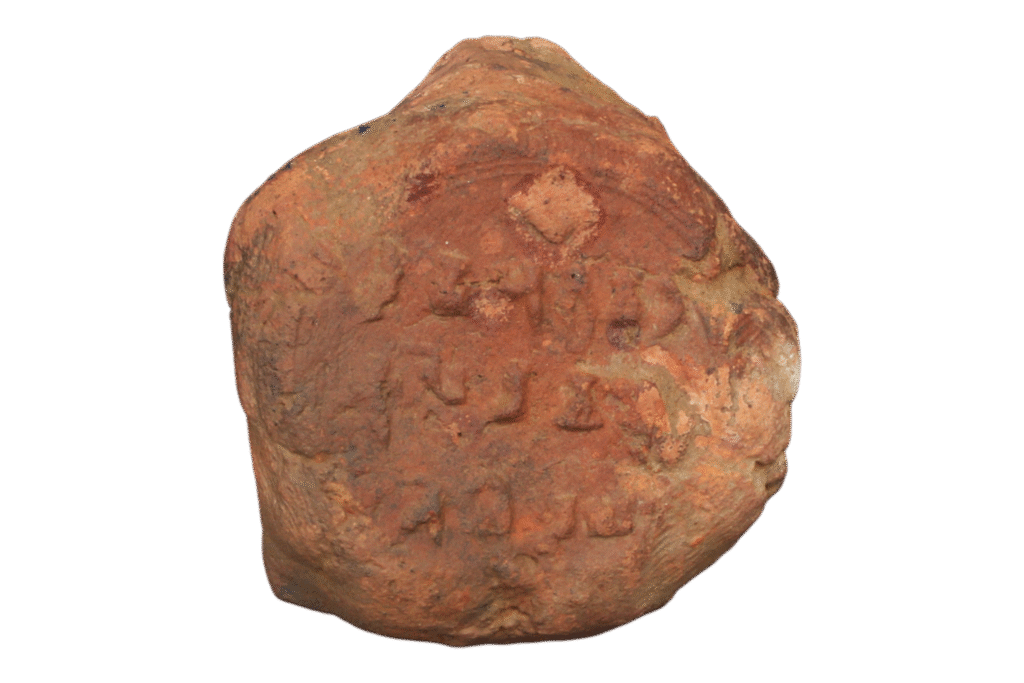
The terracotta sealings discovered at Piprahwa, primarily during the extensive excavations led by K. M. Srivastava (1971–1977), represent one of the most significant epigraphic finds for establishing the site’s identity as ancient Kapilavastu, the home of the Buddha. These artifacts are characteristically terracotta bear crucial inscriptions in the Brahmi script, which, based on paleography, are […]
Elephant figurine
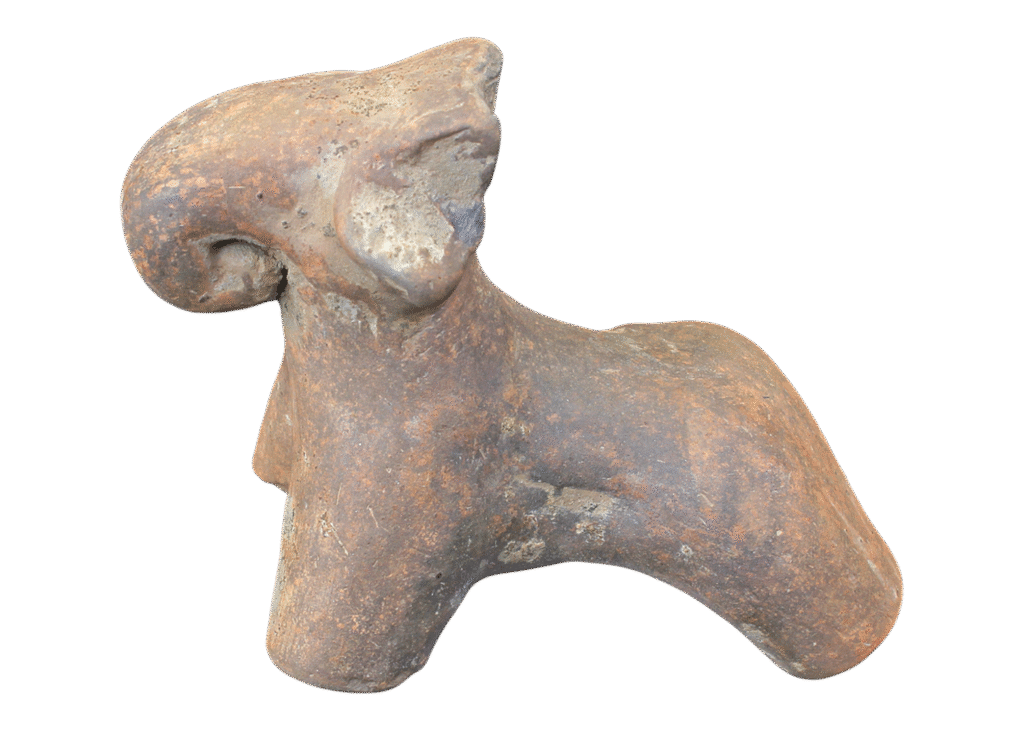
A hand-sculpted terracotta elephant figurine has an inward-curving trunk. The right ear is damaged, and all legs except the right hind leg are cracked, reminiscent of animal figurines from Harappan sites.
Sanghamitra carrying sapling
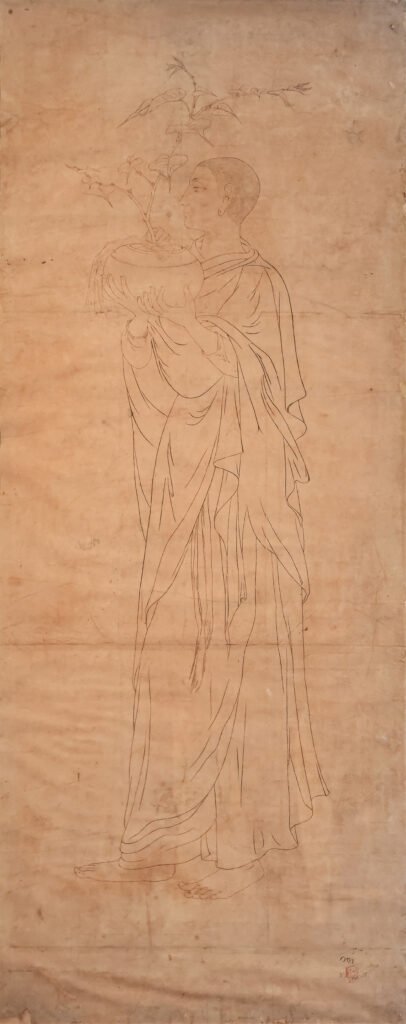
Nandalal Bose’s ink drawing portrays Sanghamitra, the daughter of Emperor Aśoka, as she carries a sacred Bodhi Tree sapling to Sri Lanka. Her calm demeanour highlights her vital role in spreading Buddhism. The artwork emphasises the tree’s significance as a symbol of Buddha, showcasing Sanghamitra’s dignity and serenity with expressive lines and an ethereal quality. […]
Group of dancing figures
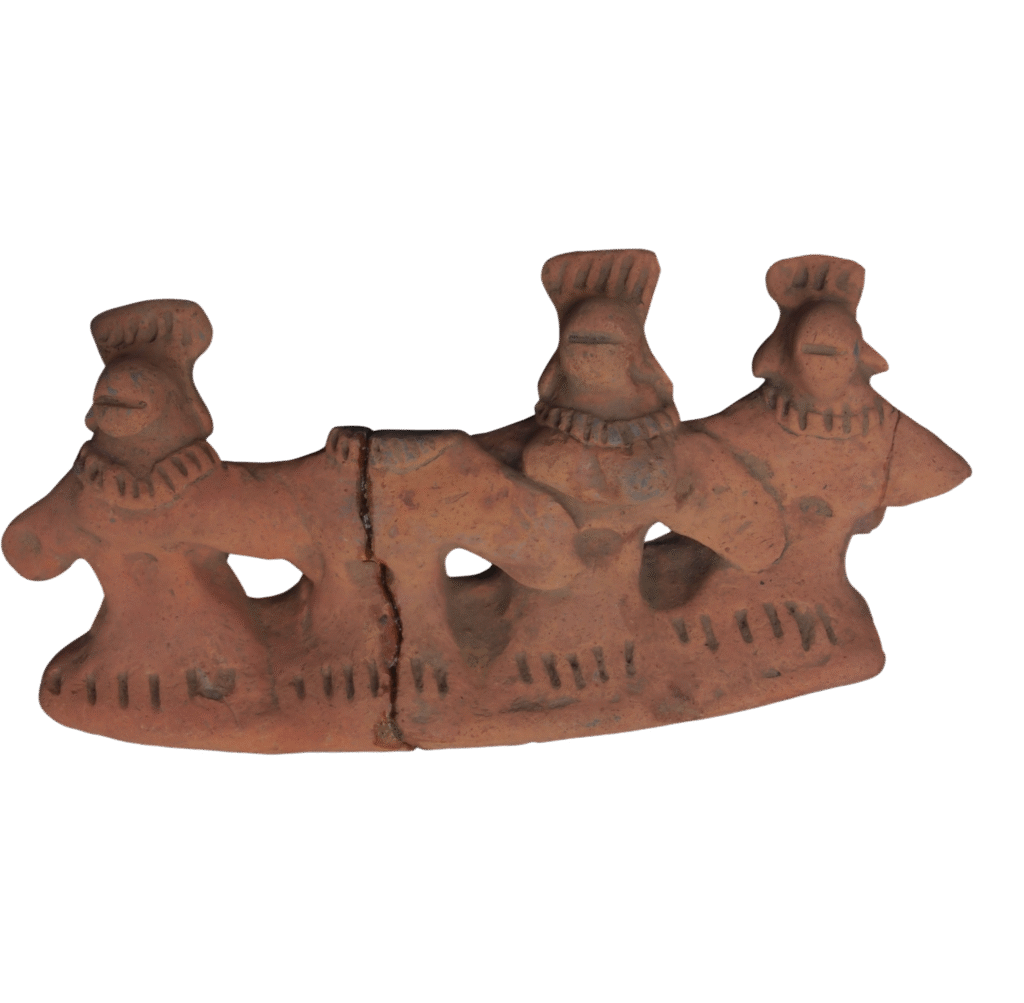
Four simple dancing anthropomorphic figures with their hands joined, are presented together on a common pedestal. These figures appear to be belonging to the folk cult associated with mother goddesses. Special emphasis is given to the rendering of ornamentation through parallel incision marks. The figures are shown with decorative headgear and heavy necklaces. Incised lines […]
Buddha in bodhyanga mudra
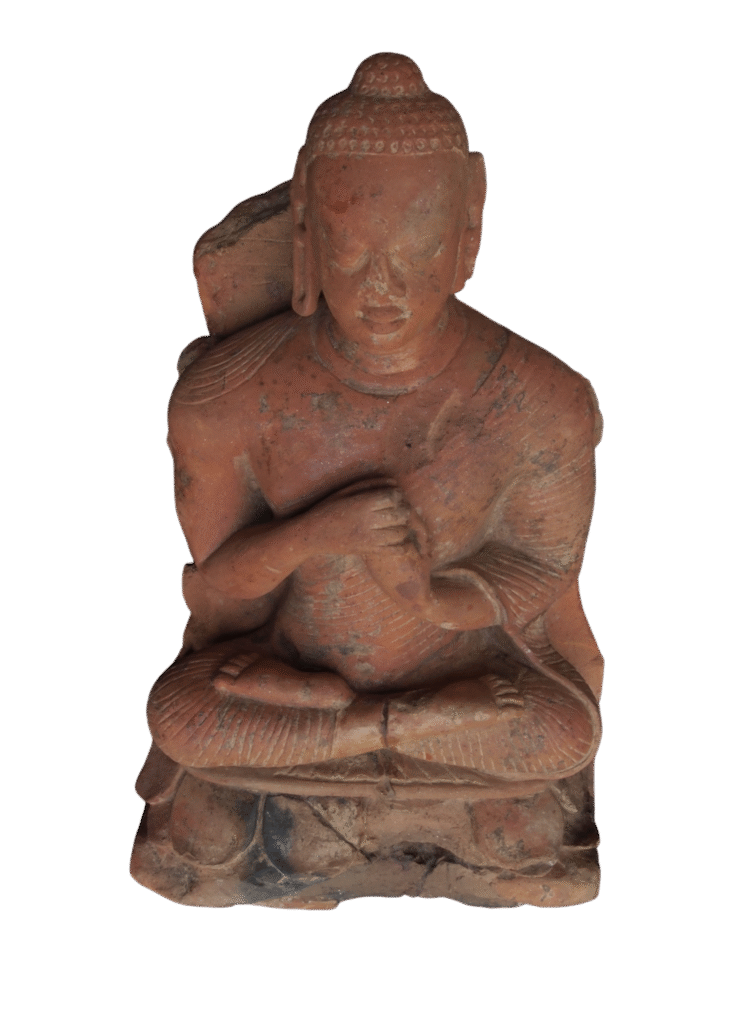
Terracotta representations of the Buddha hold an essential place in the study of early Buddhist art, even though they appear less frequently than images made in stone or stucco. In this sculpture, the Buddha is depicted in bodhyanga mudra (the teaching gesture). His calm and serene expression, reflecting the spiritual ideal associated with the Buddha, […]
A fragmented human head
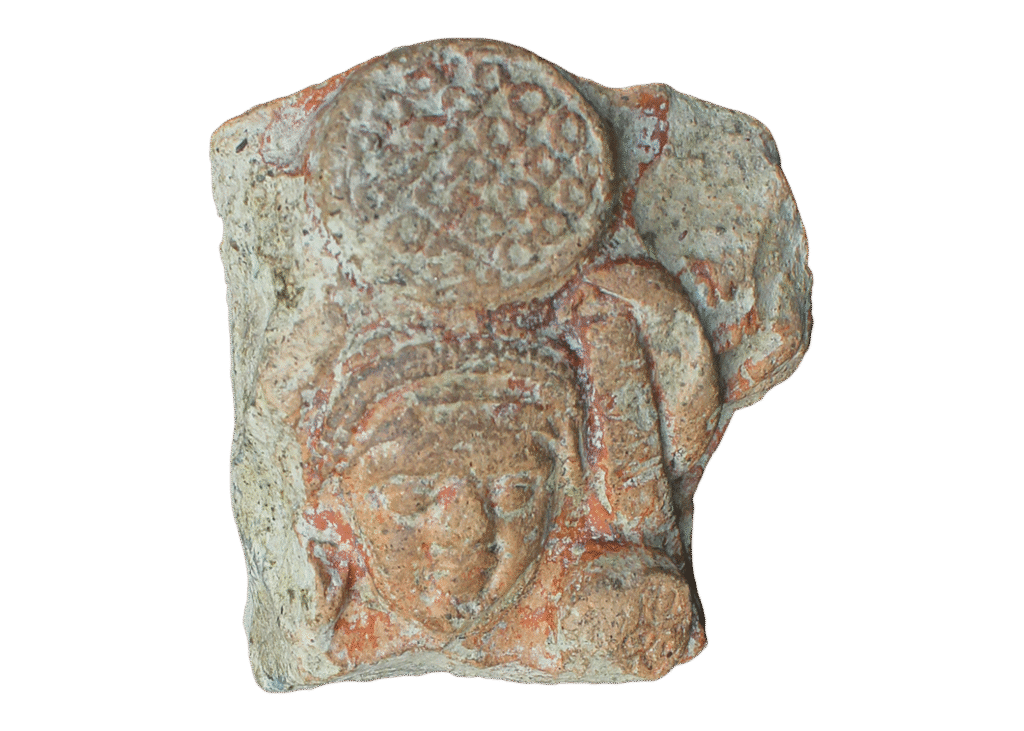
Carved in low relief, this fragmented human head has a distinct charm. Most striking feature is the elaborate hairstyle, adorned with a round decorative diadem. The hair appears to be pulled back or covered by a band. A clear ridge or turban-like wrapping is visible around the forehead, which may suggest a specific status (divine, […]
Descent from Trayastrimsa Heaven
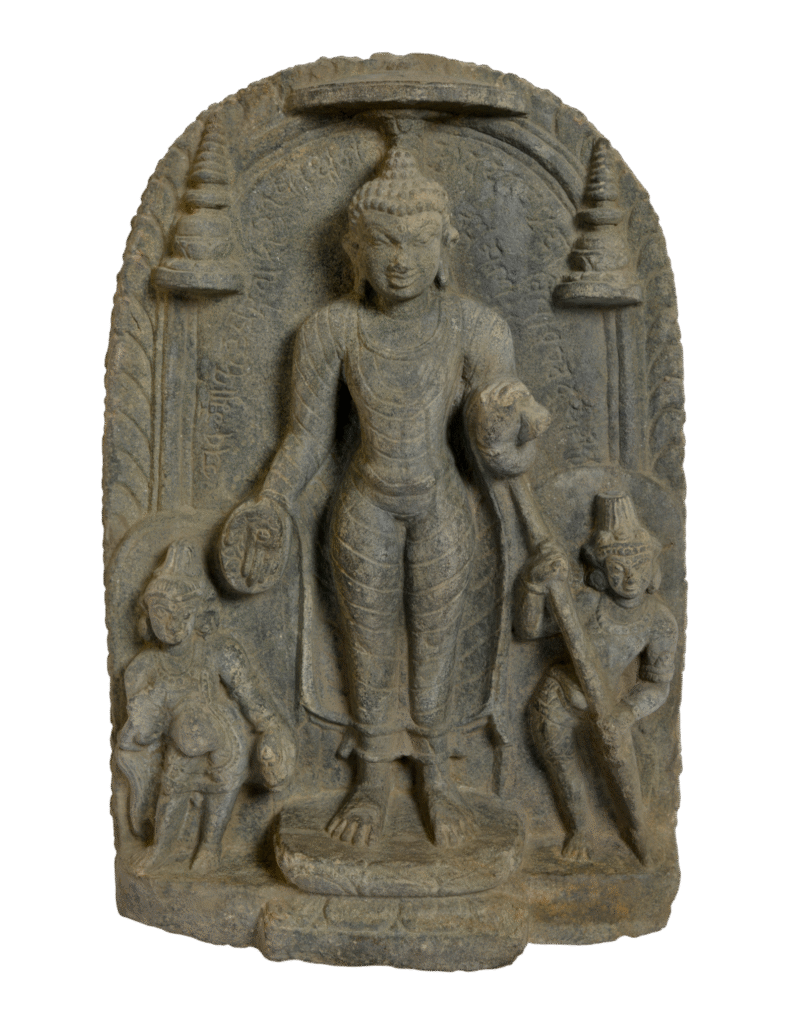
Another important event of in the life of Buddha is the descent from the heaven the thirty-three gods (Trāyastriṁśa), where he had gone to preach dharma to his mother for three months. This stele depicts Buddha in a frontal pose, his right hand in the boon-bestowing gesture (varada mudra). The Hindu deities, Brahma and Indra, […]
Votive Plaque showing Buddha’s great Demise (Mahaparinirvana)
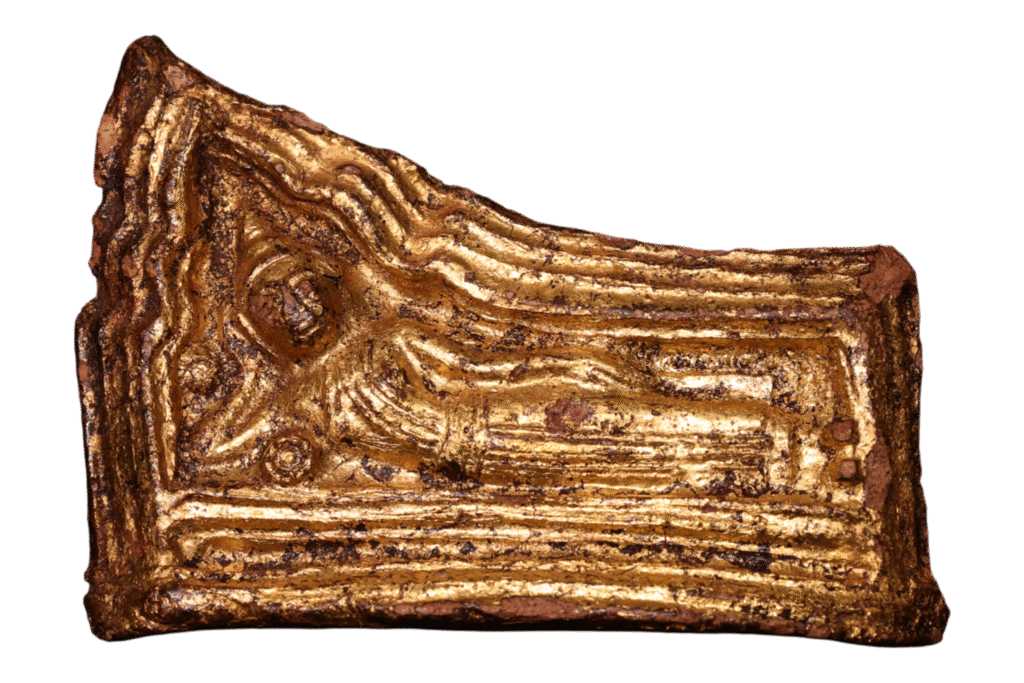
A gilded votive tablet depicting the reclining Buddha in the state of mahaparinirvana exemplifies the iconography associated with the Buddha’s final moments. This subject matter is extensively represented in both Indian and Thai votive artefacts, highlighting the cultural significance and artistic traditions surrounding this pivotal event in Buddhist narrative.